Hardtop Gazebo Assembly Cost: Metal vs Wood Kits
Wood posts do not automatically mean a higher assembly price. Compare the exact frame, roof, dimensions and installation scope before choosing between hardtop kits.
Table of contents
A wooden gazebo can still have a metal hardtopWhat UPTask charges for a hardtop configurationWhich construction details change the work?Compare the same scope with a worked exampleKeep the base and finishing budget separatePrepare a useful metal-versus-wood quote request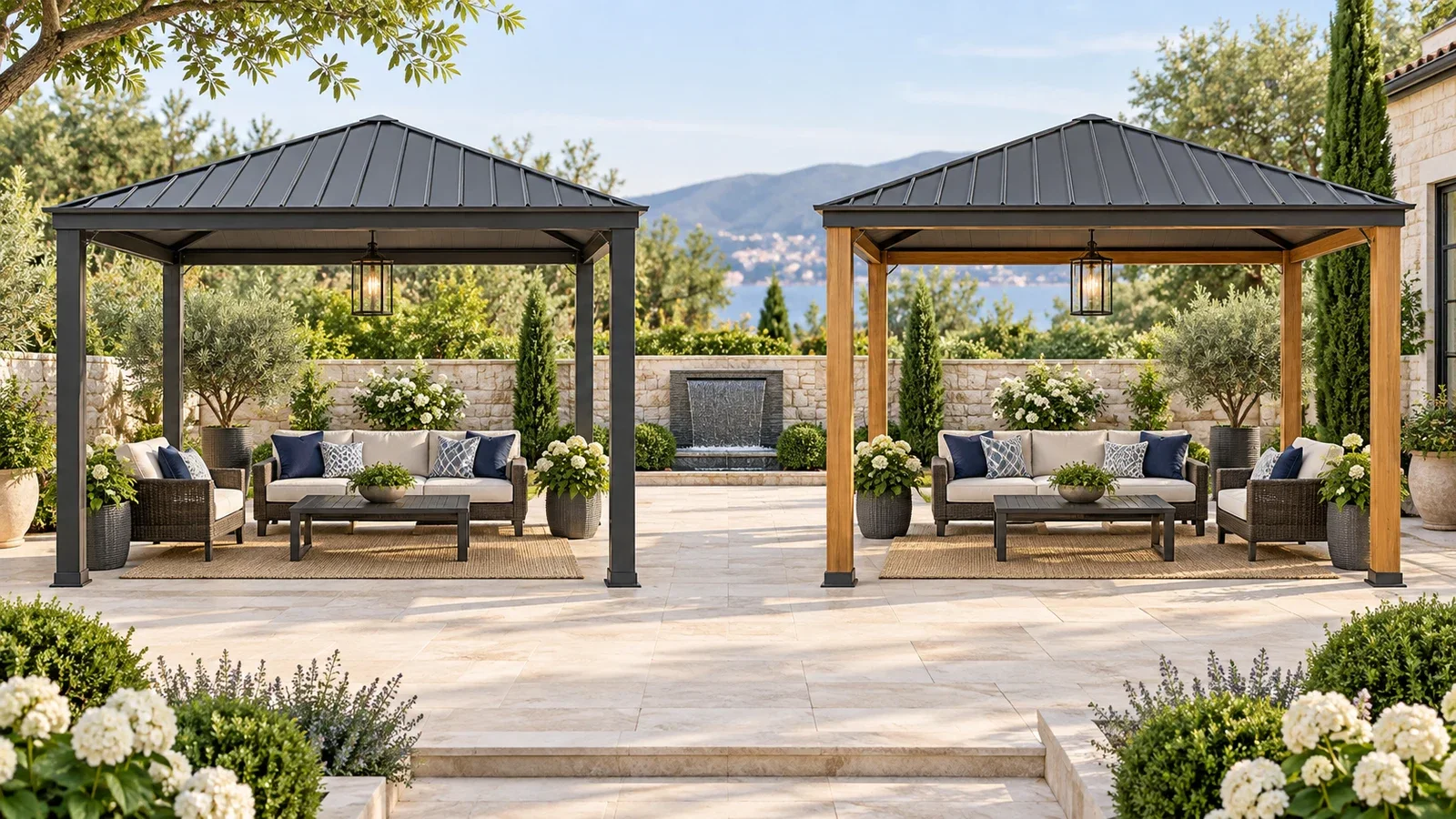
UPTask’s listed hardtop gazebo assembly configurations range from $499 to $1,199, based on the longest side and supplied roof type. The current service does not publish a separate wood-frame surcharge. That means “metal versus wood” is not enough information to choose the price: identify the actual kit and roof construction first. These Bay Area assembly amounts were checked September 30, 2026 and exclude purchasing the structure.
Material still matters when reviewing the work. A timber frame and an aluminum frame may arrive with different parts, connections and lifting steps. This guide explains how to compare those differences without assuming that every wooden kit costs more, or that every metal kit is quicker to assemble.
A wooden gazebo can still have a metal hardtop
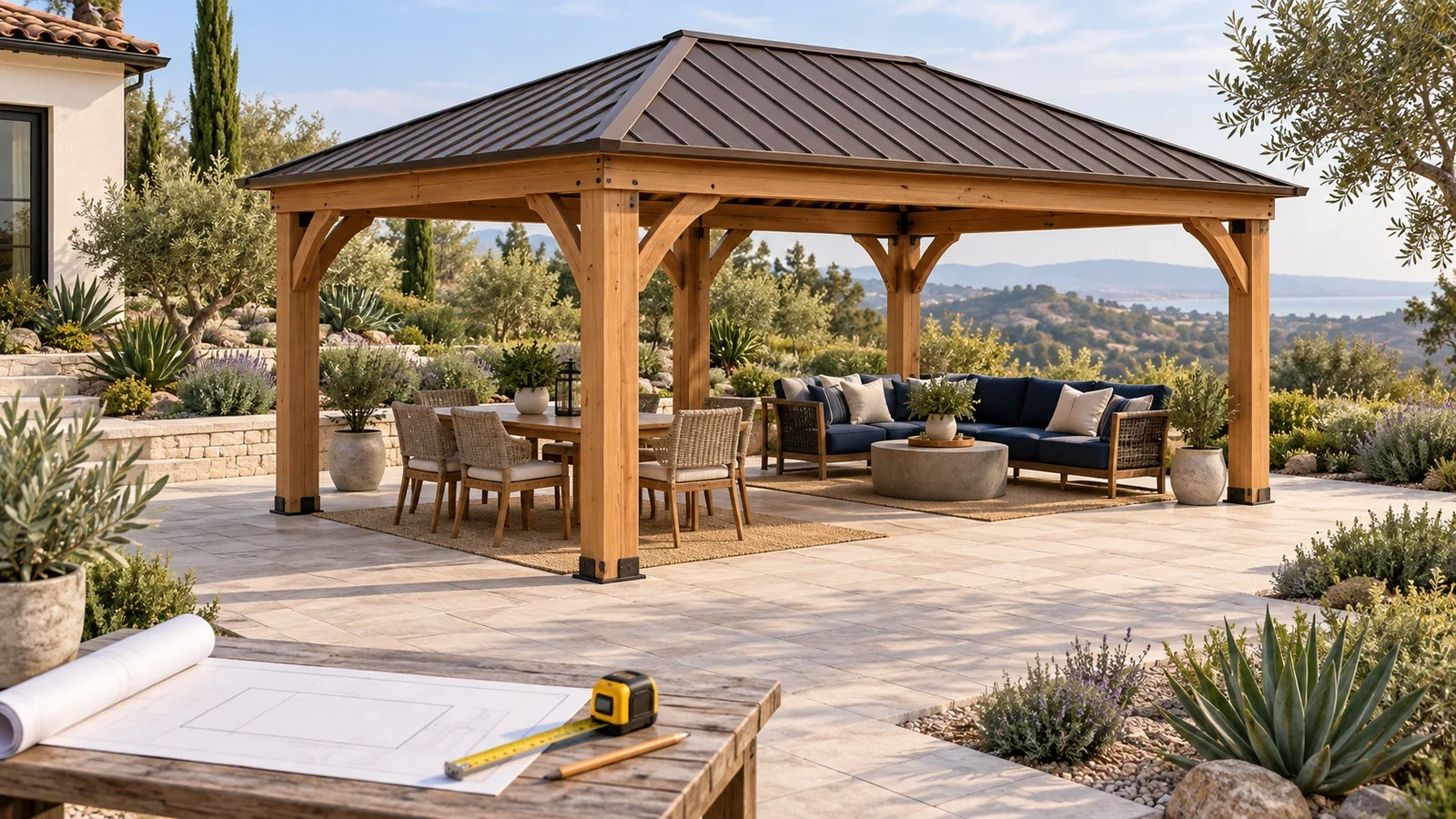
Separate the frame material from the roof material. A listing described as a wood gazebo usually refers to its posts and beams; it does not necessarily describe the roof. Yardistry’s YM12983, for example, combines lumber with an aluminum roof and steel trusses. SOJAG describes its Ventura with an extruded aluminum frame and galvanized steel roof panels.
Those examples show why a single label can be misleading. When comparing two products, record the frame, roof construction and complete model number for each. “Hardtop” distinguishes a rigid roof from a fabric canopy, but it still leaves questions about panels, tiers, supporting parts and assembly sequence. A product photo is useful context; the manual supplies the detail.
| Comparison point | Metal-frame kit | Wood-frame kit |
|---|---|---|
| Frame identification | Check aluminum, steel or mixed components. | Check supplied posts, beams and frame hardware. |
| Roof identification | Confirm rigid roof material and configuration. | A wood frame may also have a metal-panel roof. |
| Preparation | Read the actual parts and fastener sequence. | Check pre-cut parts and any required pilot holes. |
| Handling | Check component and roof-section requirements. | Check component and roof-section requirements. |
| Price selection | Use the provider’s stated pricing criteria. | Do not invent a wood premium absent from the quote. |
What UPTask charges for a hardtop configuration
UPTask’s displayed hardtop choices are single-layer and multi-panel/double-roof. Combining the published size amount and roof addition gives the following totals. They describe assembly of customer-supplied parts; they are not national averages, kit prices or complete installed-project budgets.
| Longest side | Single-layer hardtop | Multi-panel / double roof |
|---|---|---|
| Up to 10 ft | $499 | $599 |
| 11–14 ft | $649 | $749 |
| 15–18 ft | $799 | $949 |
| Over 18 ft | $999 | $1,199 |
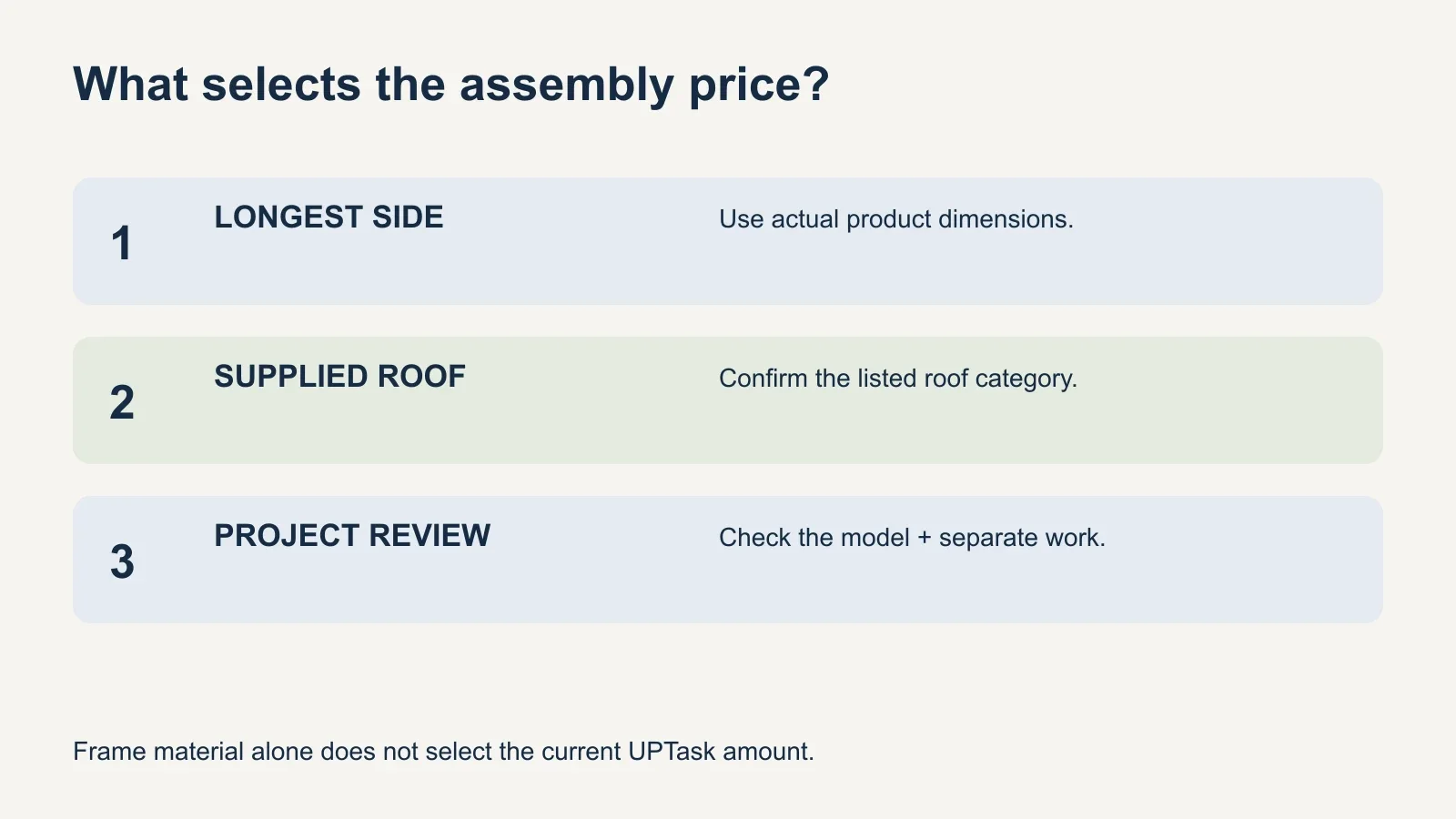
If two reviewed kits belong to the same size bracket and roof selection, this displayed system produces the same assembly amount even when their frame materials differ. That does not guarantee identical working time or make every model interchangeable. Confirm the model, access and any additional scope before booking.
Use the longest side in the actual product dimensions. If it falls between the displayed ranges, ask which option applies instead of rounding down. Nominal product names can differ from roof measurements. For the full pricing explanation, see the gazebo assembly cost guide.
Which construction details change the work?
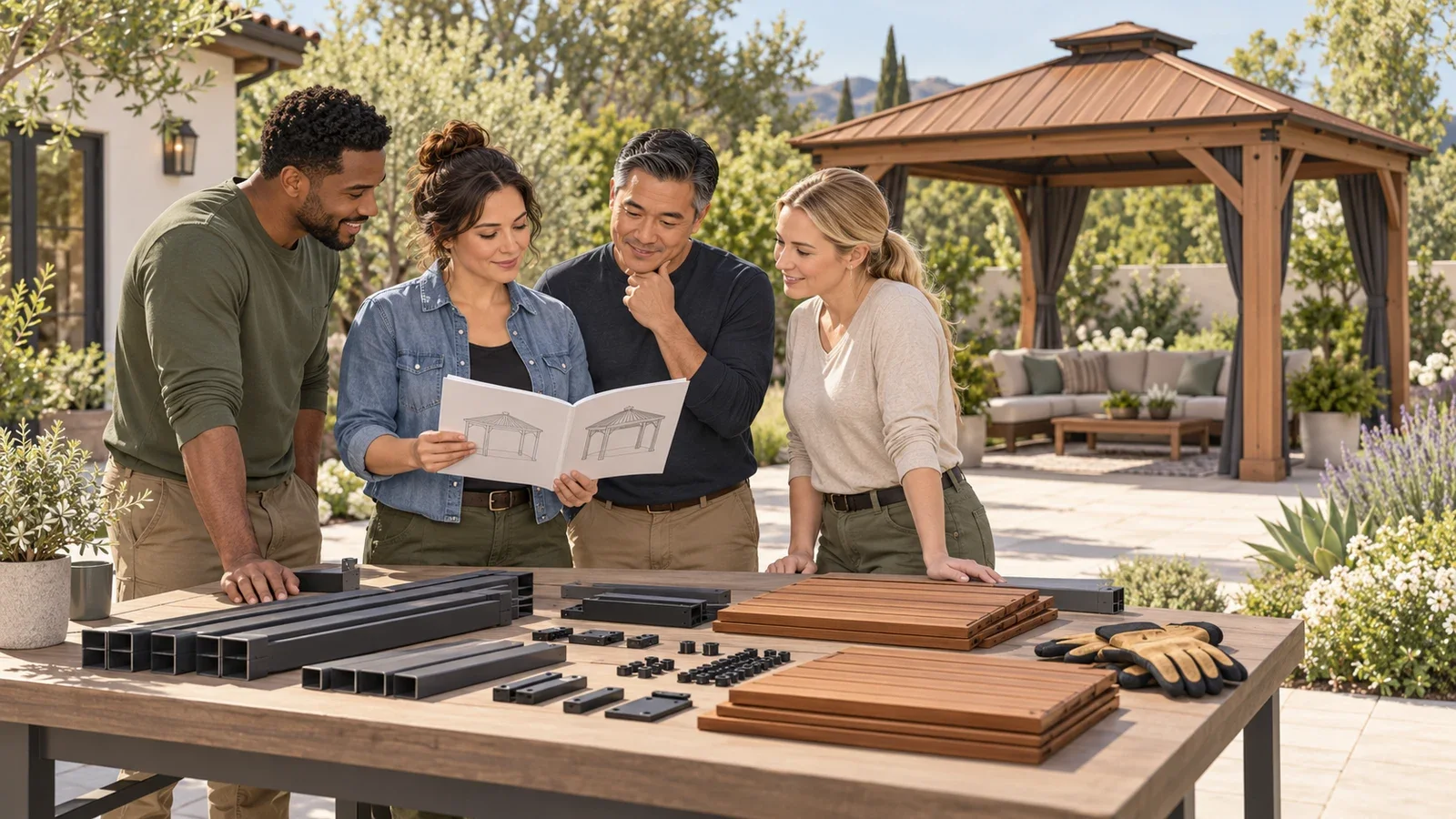
Look at the assembly sequence, not just the finished silhouette. How many frame assemblies are built first? Are roof sections prepared on the ground? Which steps need several people at once? Does the manual specify pilot drilling or a particular tightening sequence? These questions give an assembler a clearer picture than “cedar hardtop, medium size.”
A ready-to-assemble wooden kit may already have substantial preparation completed at the factory. Backyard Discovery describes its gazebo kits as pre-cut and pre-drilled, with interactive instructions available. That does not eliminate assembly, but it means you should not price every wooden kit as custom carpentry or assume on-site cutting is required.
Yardistry’s 10×10 Meridian manual illustrates another distinction: it calls for pilot holes before specified wood screws or lags and warns against crushing roof panels with powered tightening. These instructions belong to that model. Use them as a reminder to read the manual, not as a universal procedure for a different wood or metal gazebo.
Compare the same scope with a worked example
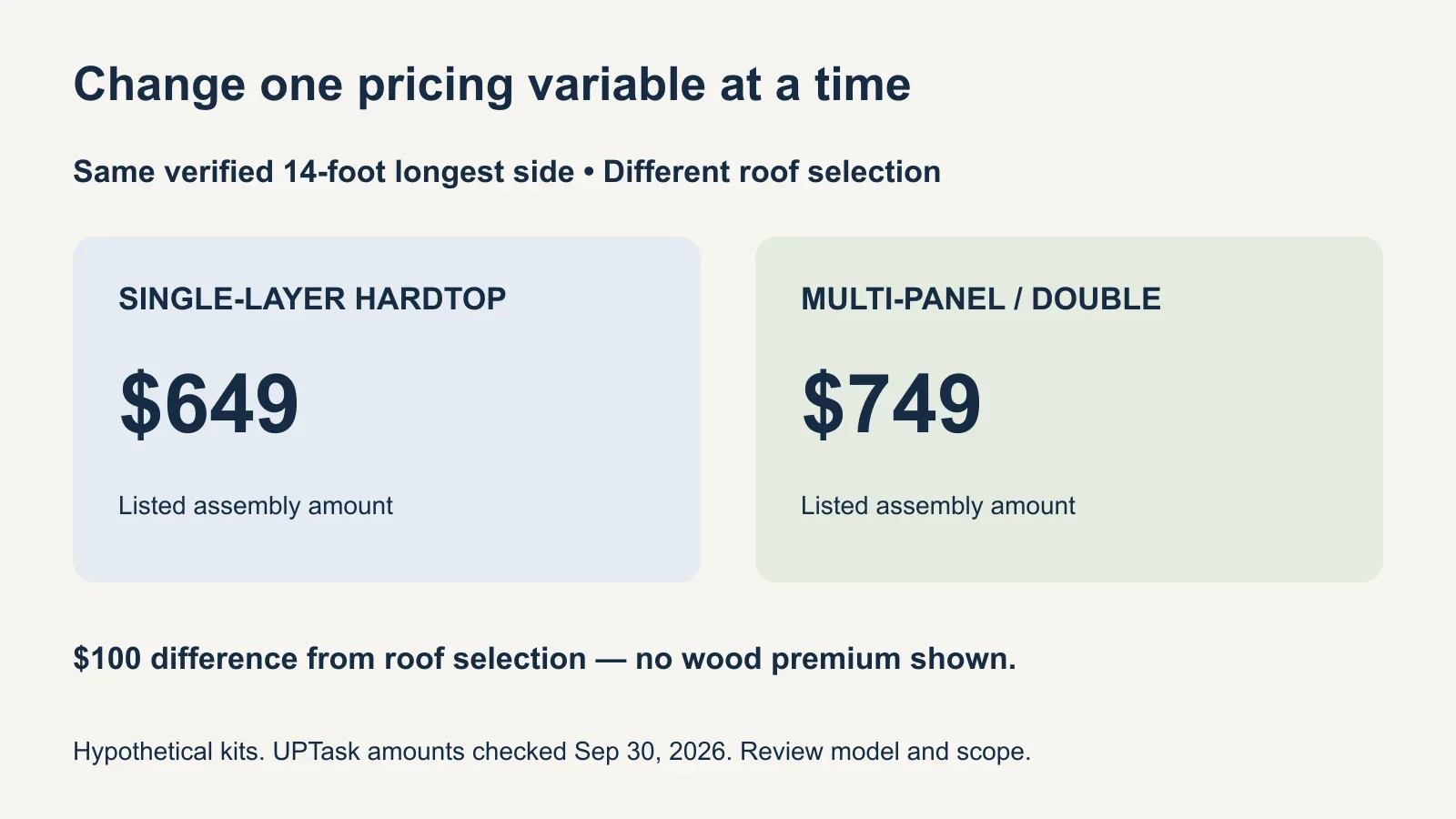
Consider two hypothetical kits whose actual longest side is 14 feet and whose roofs have both been reviewed as single-layer hardtops. Under the displayed UPTask selection, each is $649 for assembly, regardless of the comparison’s metal-versus-wood label. This is a conditional pricing example, not a quote for an unnamed retail product.
If one of those kits instead belongs in the multi-panel/double-roof selection, its displayed amount becomes $749. The $100 change follows the roof choice. It should not be described as a wood surcharge. The exact same reasoning applies when the dimension changes: compare one variable at a time before attributing the difference to the material.
Now imagine one outside quote also includes hauling away an old gazebo while another covers assembly only. The higher total may reflect that extra work, not the new frame’s material. Ask for a scope breakdown so the comparison remains useful. Do not subtract an assumed removal allowance from a bundled quote without the provider confirming it.
Keep the base and finishing budget separate
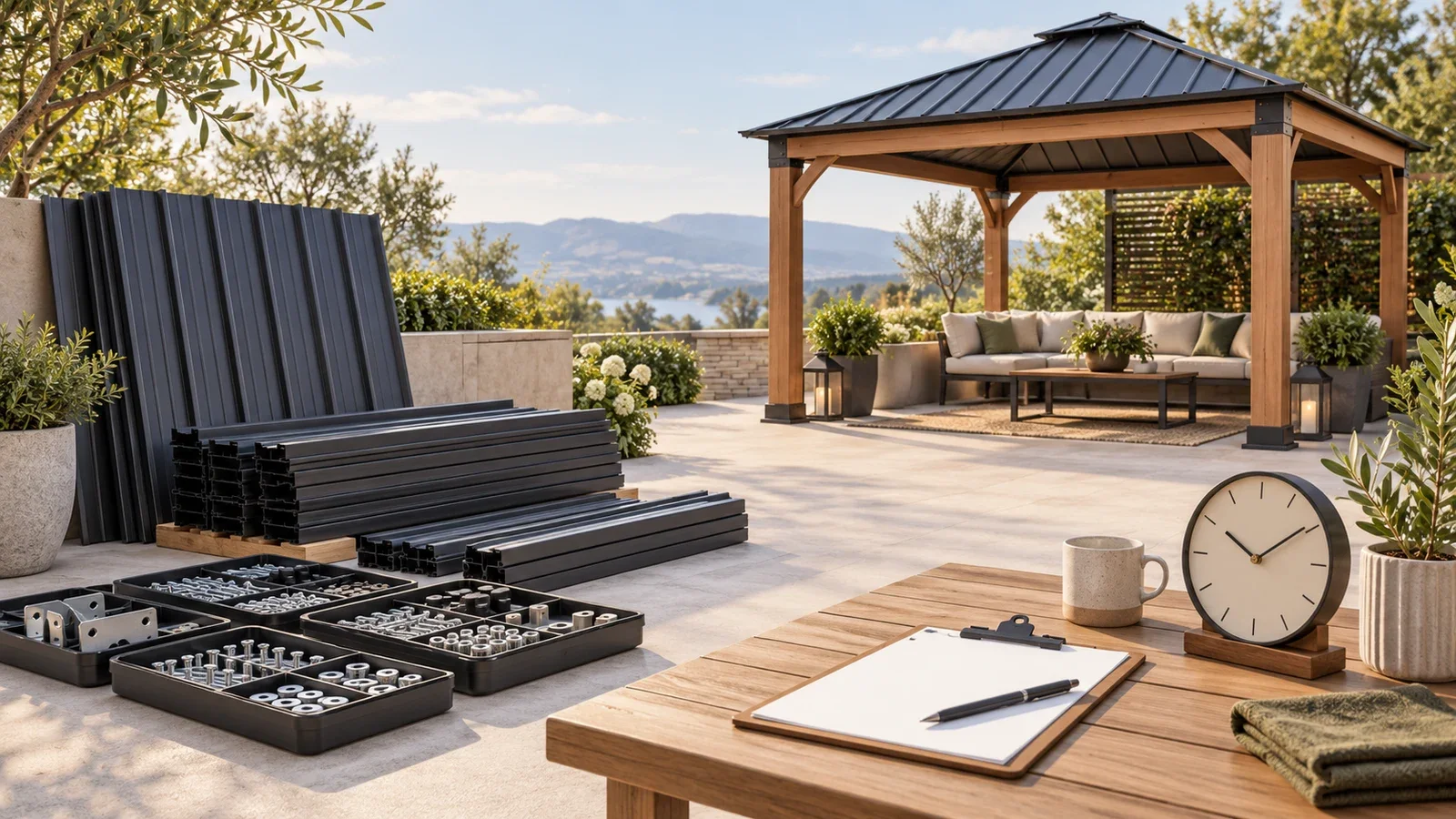
A solid-looking frame does not establish whether your patio or deck is suitable. Both kits need the installation conditions specified by their manufacturer. UPTask’s size-and-roof selection does not automatically include foundation work, ground preparation, anchoring, electrical work or removal. Resolve those responsibilities alongside the assembly plan.
- Base and permanent attachment: review the exact structure and existing surface.
- Carrying and staging: identify access from delivery to the work location.
- Existing structure: agree on dismantling and disposal if needed.
- Packaging: distinguish tidying cartons from hauling them away.
- Finishing and accessories: identify sealing, gutters, screens or lighting as separate scope where applicable.
Future maintenance also belongs in the ownership comparison. A lower assembly amount does not tell you the long-term cost of caring for a finish, replacing a damaged part or maintaining the roof. Review each manufacturer’s care instructions before purchase. Avoid treating a marketing phrase about one material as a promise that the complete structure needs no inspection or upkeep.
Prepare a useful metal-versus-wood quote request
Send the provider two product records with equivalent detail: exact model, actual dimensions, roof type, manual and intended location. If you already own one kit, make clear that it is delivered and identify missing components or prior assembly. A comparison based on the shopping-page title alone leaves too much unknown.
- Identify each kit’s frame and roof separately.
- Match actual dimensions to the provider’s size rules.
- Confirm the roof category from the purchased model.
- List the same site work, access and cleanup for both options.
- Compare the resulting total scope and appointment assumptions.
If new seating is part of the project, plan patio furniture assembly as a separate item. For the structure itself, review UPTask’s gazebo assembly service with the manual and site details ready. Choose the configuration that describes the actual kit, then confirm the complete scope.