Gazebo vs Pergola Installation: Cost, Assembly Time & Site Requirements
Compare the actual roof, kit and site scope. An open pergola, louvered pergola and hardtop gazebo can have very different assembly requirements.
Table of contents
Compare the roof you are actually buyingCompare UPTask assembly prices by the same size bracketRead assembly-time estimates with their assumptionsBoth structures need an evaluated support and attachment planCheck access, staging and optional featuresChoose the structure that fits both the use and the site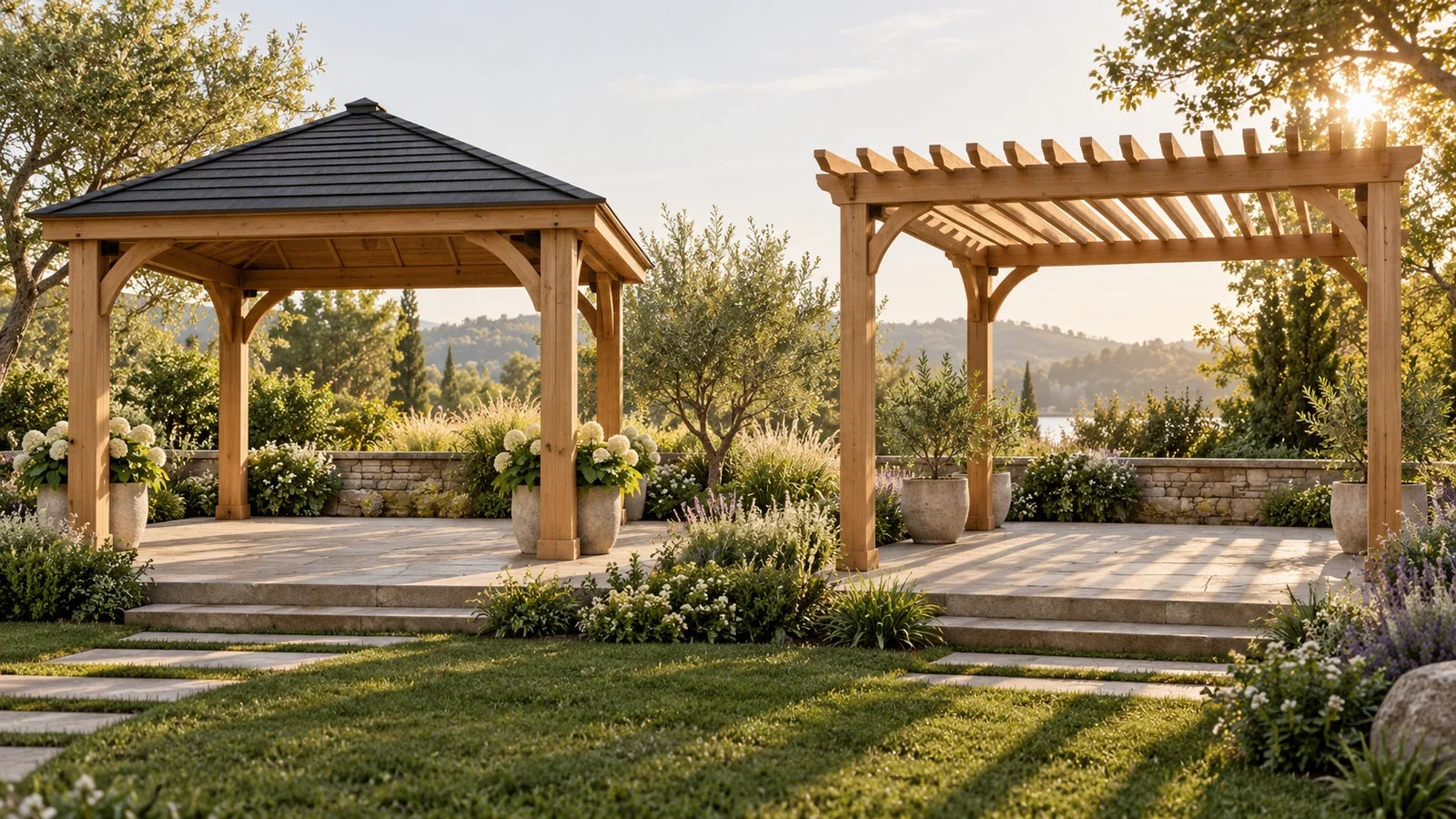
Gazebo versus pergola installation is best compared by the roof, exact kit and site scope—not the product name alone. UPTask’s Bay Area assembly selections currently run $499–$1,199 for hardtop gazebos, $349–$899 for standard open-roof pergolas and $549–$1,099 for louvered pergolas. These are customer-supplied kit assembly amounts, not complete project budgets. Assembly time and foundation requirements still need model-specific review.
The prices below were checked October 9, 2026. This guide compares assembly of purchased kits, rather than custom structures built from raw materials. It also separates time spent putting parts together from the longer schedule for delivery, local approvals, base work and installation readiness.
Compare the roof you are actually buying
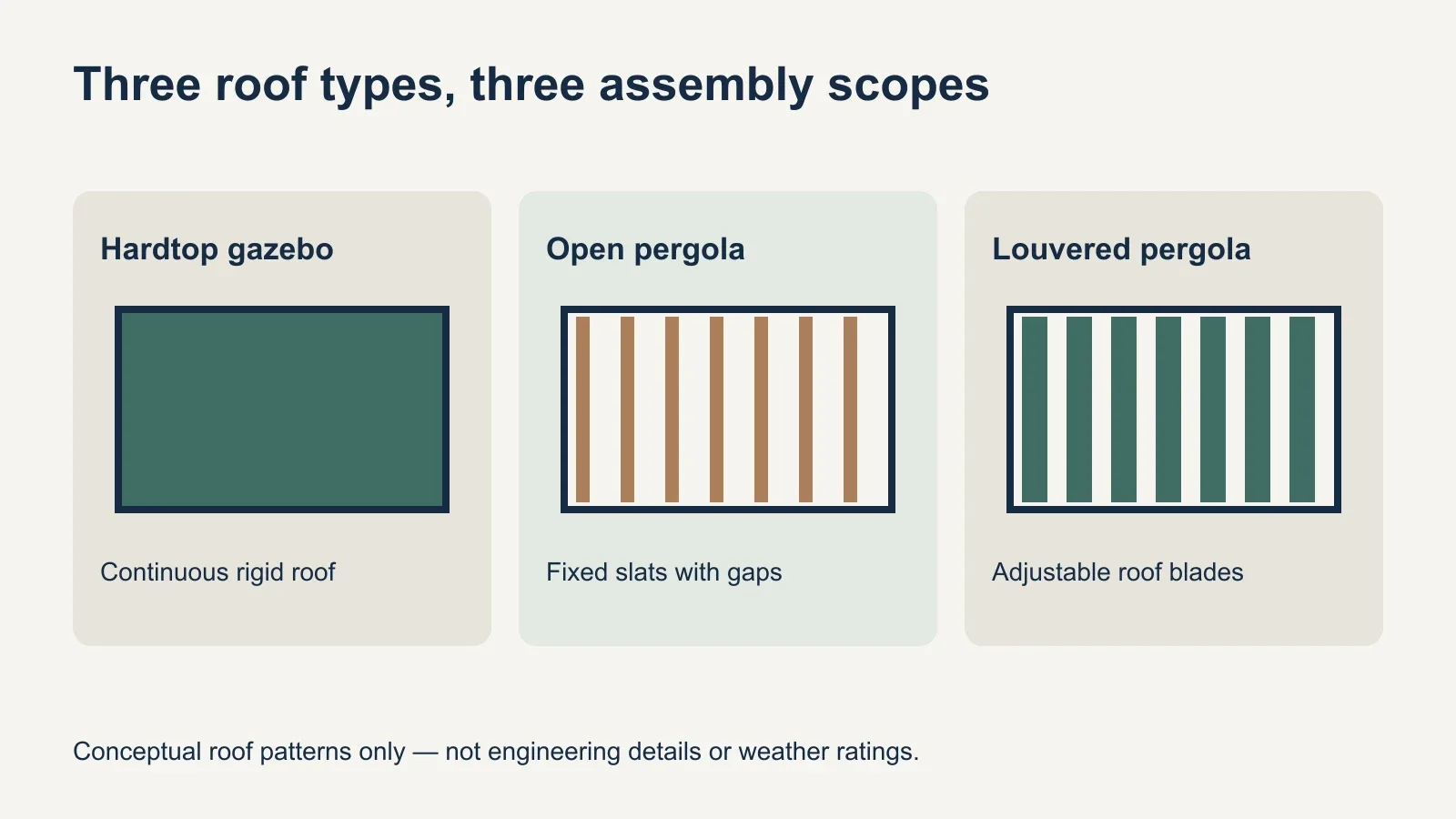
A hardtop gazebo has a continuous rigid roof. A traditional open pergola has spaced beams or slats that leave gaps overhead. A louvered pergola adds adjustable roof components, so it should not be treated as the same assembly task as a simple open frame. Some gazebos use fabric canopies instead of hardtops, adding another distinct option.
Start with how you want to use the space. An open trellis offers a different experience from a continuous roof. For an adjustable-louver model, check the manufacturer’s operating and drainage instructions rather than assuming it performs like a fixed gazebo in every position. Weather performance depends on the exact product and installation conditions, not the category label.
Frame material is another separate detail. A wooden gazebo can carry a metal roof; a metal pergola can have numerous moving roof parts. Compare the component list, connections and assembly sequence in both manuals. A product that looks simpler in a catalog photo may still involve substantial sorting, alignment and repeated fastening.
Compare UPTask assembly prices by the same size bracket
| Longest listed side | Hardtop gazebo: single / double roof | Open-roof pergola | Louvered pergola |
|---|---|---|---|
| Up to 10 ft | $499 / $599 | $349 | $549 |
| 11–14 ft | $649 / $749 | $449 | $649 |
| 15–18 ft | $799 / $949 | $699 | $899 |
| Over 18 ft | $999 / $1,199 | $899 | $1,099 |
The gazebo column shows two different roof selections: single-layer hardtop and multi-panel/double roof. Pergola louver pricing adds $200 to the open-roof amount in each bracket. A soft-top gazebo is a separate comparison: its published assembly amounts are $299, $399, $499 and $649 across the same four size brackets.
For example, within the 11–14-foot bracket, an open pergola is listed at $449, a louvered pergola at $649 and a single-layer hardtop gazebo at $649. A double-roof gazebo in that bracket is $749. The numbers do not support a blanket claim that every pergola is cheaper or that every gazebo takes more paid work.
Use the longest side in the product dimensions, not the shorter side or the interior seating area. A 10×14-foot model belongs in the bracket that includes 14 feet. If a fractional dimension falls between displayed choices, clarify the selection with UPTask instead of rounding down. Bring the actual product drawing to that discussion.
These amounts cover assembly of supplied parts. Purchasing the kit, creating a foundation, correcting the ground, attaching to a building, electrical work and removing an old structure are not automatically included. Confirm permanent anchoring and other site tasks explicitly. Compare a full project total only after the same additional work has been addressed for both options.
Read assembly-time estimates with their assumptions
A manufacturer’s time estimate can help plan a project, but it does not establish a universal gazebo-versus-pergola schedule. The examples below come from identified manual editions. They illustrate why the exact model and stated crew matter; they are not a controlled comparison of equal-sized products or a current UPTask completion promise.
| Product and manual edition | Stated average assembly time | Important limit |
|---|---|---|
| Backyard Discovery Brockton 14×10 pergola, model 2106543; July 24, 2020 manual | 5 hours with 2 people | Manual says time varies with skill level. |
| Backyard Discovery Arlington 12×12 gazebo, model 2001527; November 21, 2019 manual | 9 hours with 2 people | Manual says time varies with skill level. |
Use the current instructions for the kit you own, even when an older manual provides a helpful planning example. Different models can require different numbers of people at lifting stages. Do not convert a two-person estimate into a solo plan or assume that doubling the crew cuts every assembly step in half.
Ask what the installer’s estimated visit includes: unloading and sorting, frame assembly, roof work, attachment and cleanup. Also ask what must be completed beforehand. The gazebo assembly-time guide explains why elapsed time, total labor hours and the full project calendar are different measures.
A simple hypothetical calculation makes the distinction clear: two people working for six hours contribute 12 labor-hours, while the elapsed work period is six hours. It does not mean either structure in the table can be finished in six hours. Keep estimates tied to their crew and scope rather than comparing a labor-hour figure with an appointment duration.
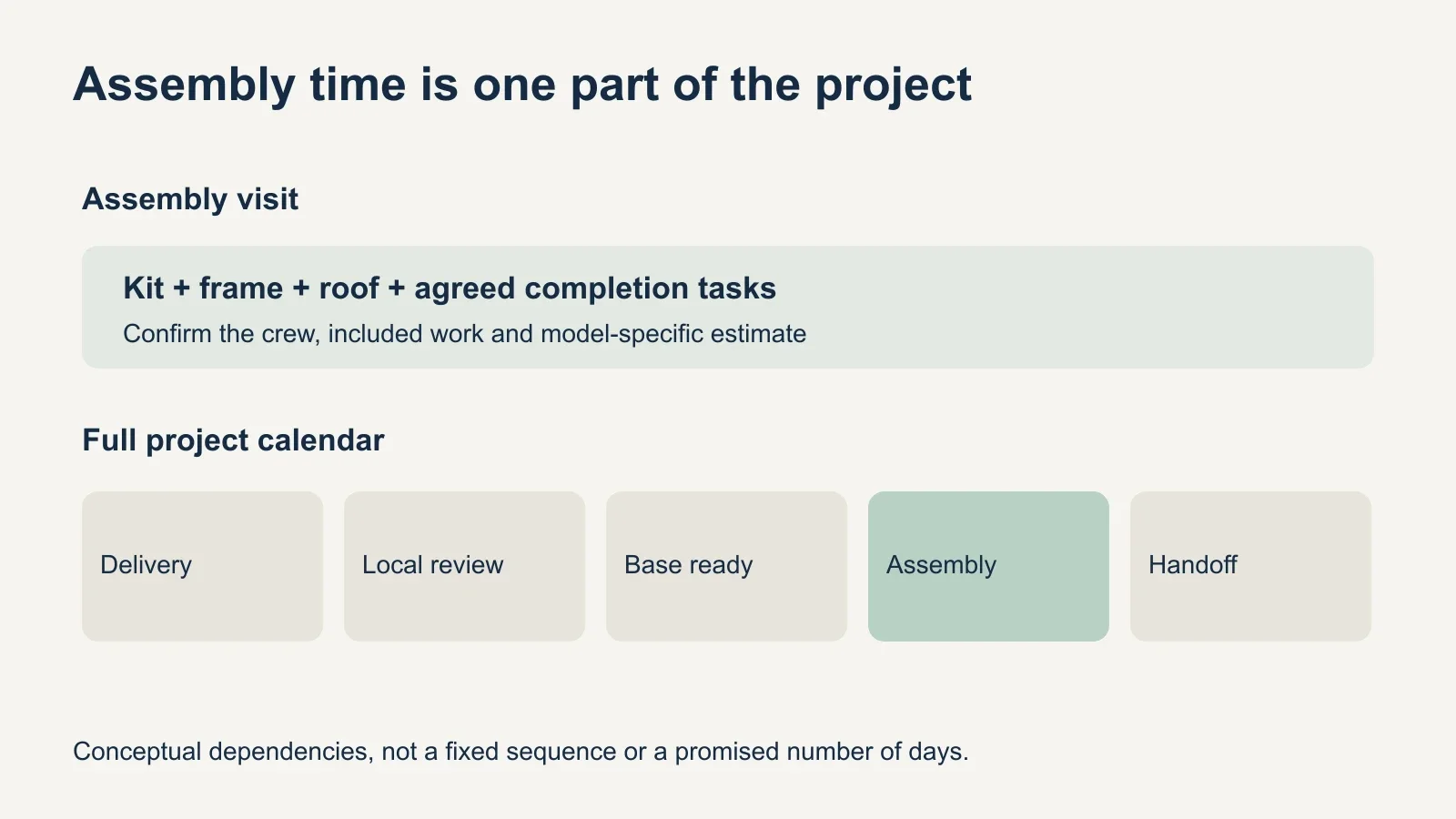
For a useful schedule comparison, give both installers the same starting conditions. State whether the kit is still boxed, where it is stored and whether the base work is complete. Ask each estimate to identify its assumptions in writing. If one estimate includes moving the cartons and permanent attachment while another starts with sorted parts on a ready base, the two durations describe different jobs.
Both structures need an evaluated support and attachment plan
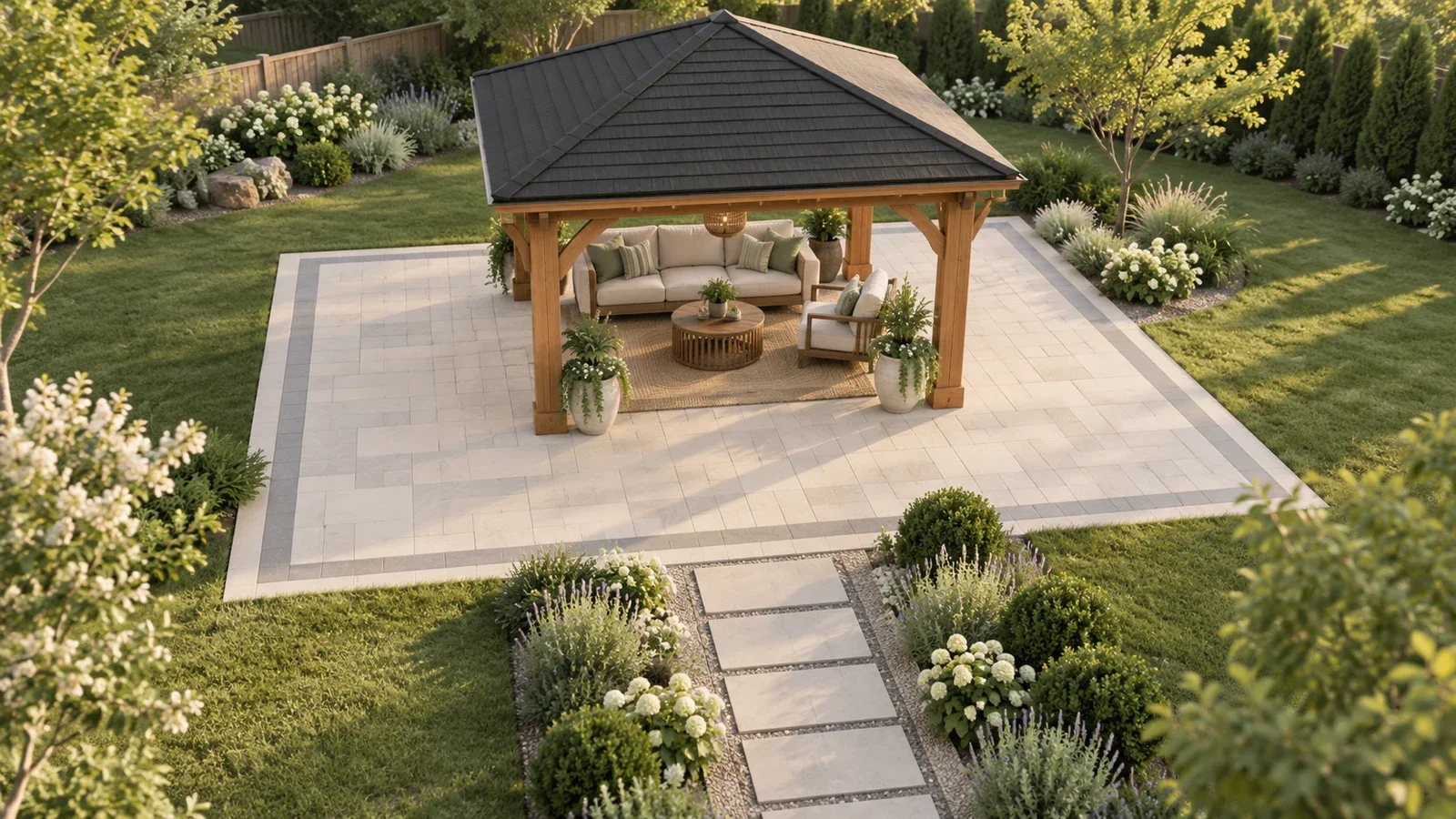
An open roof does not remove the need for a suitable base. Backyard Discovery’s Beaumont 16×12 pergola manual, for example, calls for square and level footings, a concrete pad or a deck, and describes permanent attachment. The correct arrangement still depends on the product and site. A gazebo and pergola should each be checked against their own drawings.
Measure post locations separately from the overall roof outline. Two products advertised at similar sizes may put their posts in different places, extend different distances overhead or require different connections. Do not pour supports for one kit and assume a replacement model will fit without review.
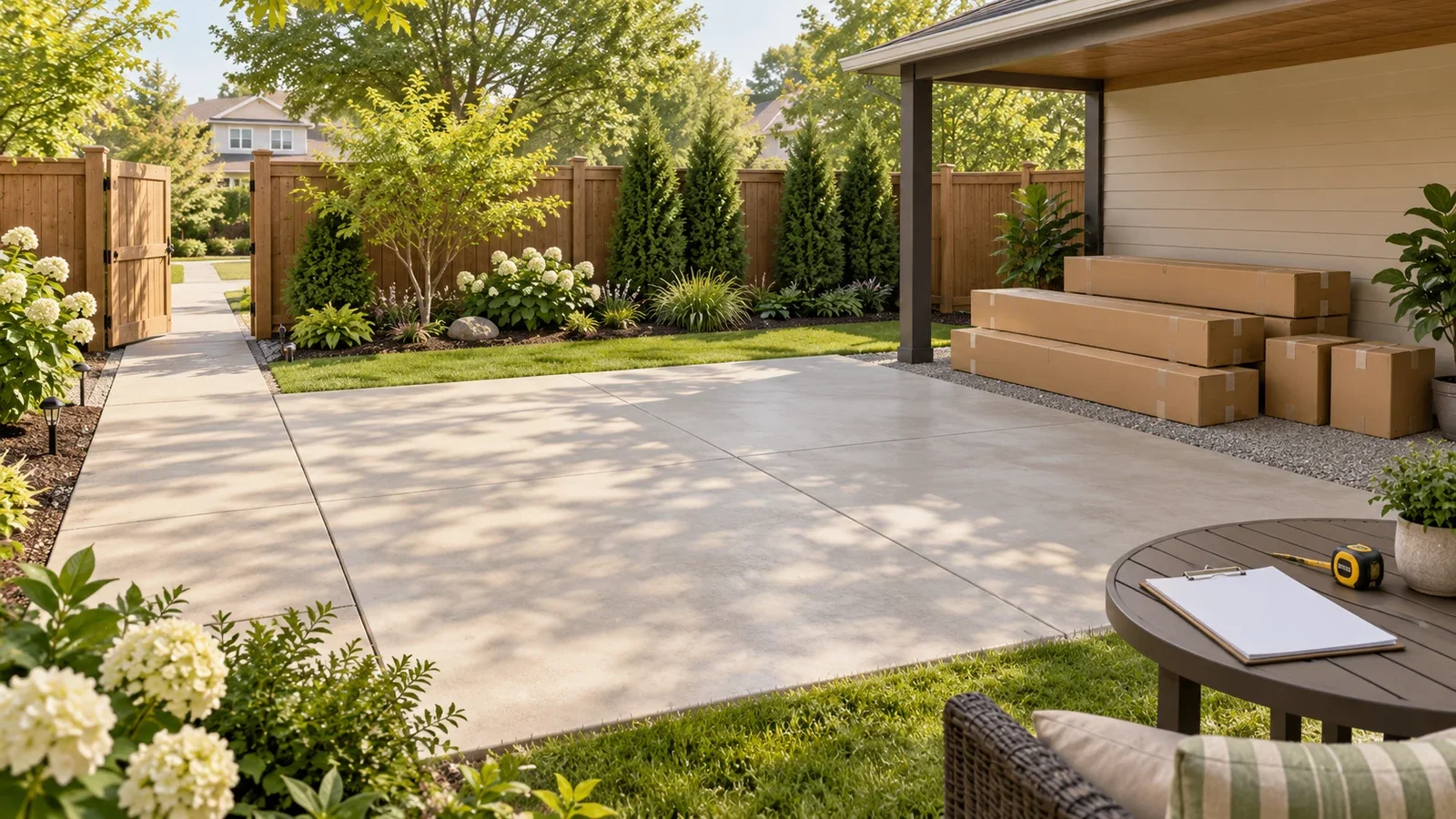
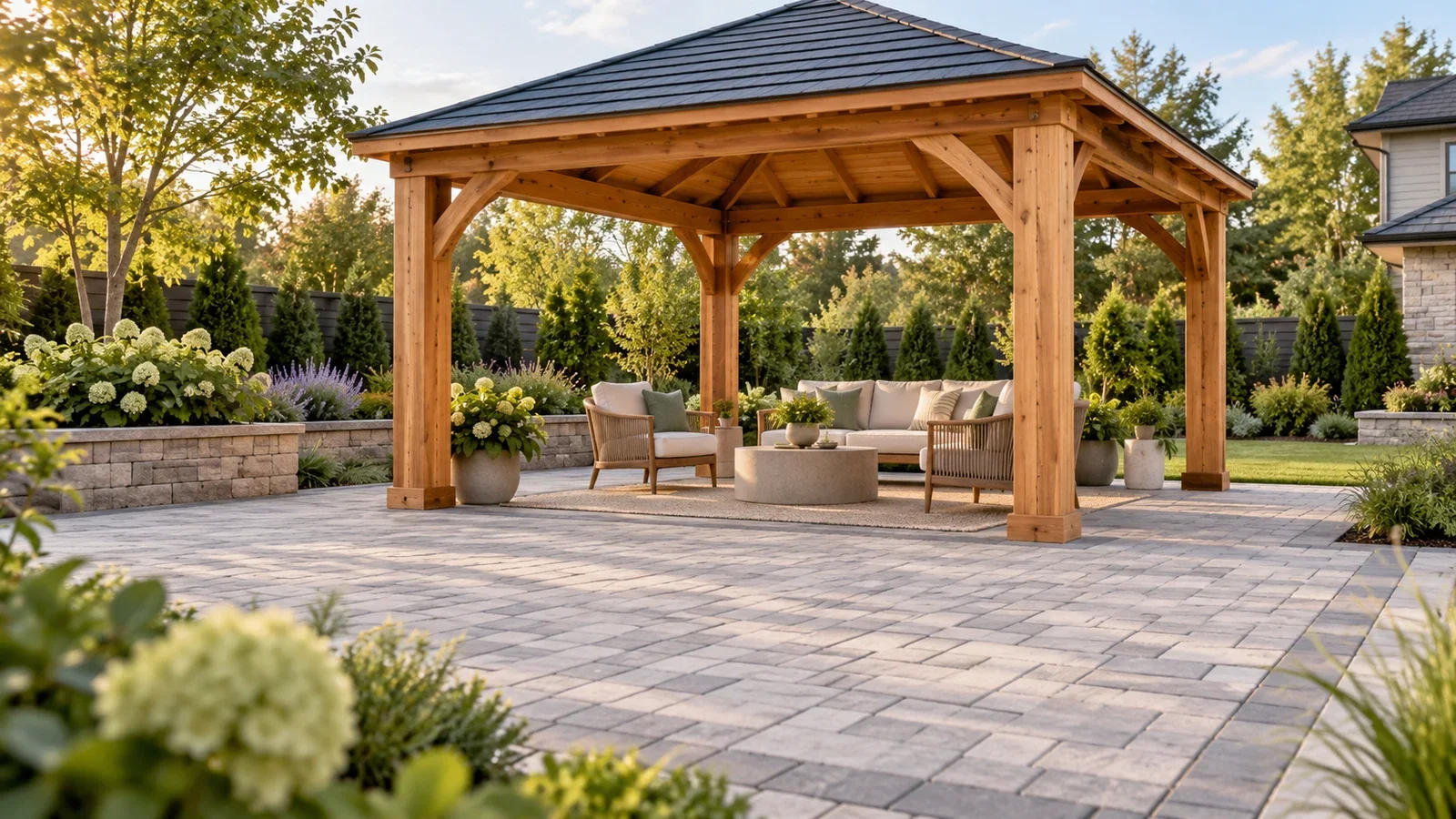
For an existing patio, show the intended mounting points and available construction information to the responsible provider. For a deck, include the supporting structure in the assessment. If the surface is pavers, resolve what provides structural support and attachment underneath. Surface appearance alone does not establish suitability for either structure.
Local requirements also need review for the actual design. A freestanding open pergola, an attached patio cover and a roofed gazebo may be classified differently. Ask the relevant building and planning departments about the proposed location and scope. Do not treat the word “pergola” as a permit exemption or a lighter-looking roof as proof that approval is unnecessary.
Check access, staging and optional features
Compare delivery and handling requirements before choosing the installation date. Long beams need a workable route through gates and around corners, and roof or louver components need staging space. Send photos of the path and the final location so the installer can evaluate the actual constraints rather than relying on the advertised footprint.
List the accessories you plan to install at the same time. Screens, curtains, lighting, control components and powered louvers should be identified by model and reviewed as part of the scope. Included electrical components do not establish that a new power supply or electrical work is included in the assembly price.
Choose the structure that fits both the use and the site
- Choose the overhead coverage and operation you want.
- Compare exact models and longest-side dimensions.
- Review each manual’s assembly and crew requirements.
- Confirm the support, connection and local requirements for the proposed location.
- Compare itemized totals and schedules for the same completed scope.
An open pergola may fit a space where filtered light is the priority. A hardtop gazebo may better match a preference for a continuous roof, while adjustable louvers introduce another set of operating and assembly requirements. Let the intended use narrow the products, then let the site review and complete quote determine what is practical.
When ready to discuss the work, compare gazebo assembly and pergola assembly with UPTask using the model manuals and photos of the same site. Confirm the included tasks and readiness requirements before choosing the installation appointment.