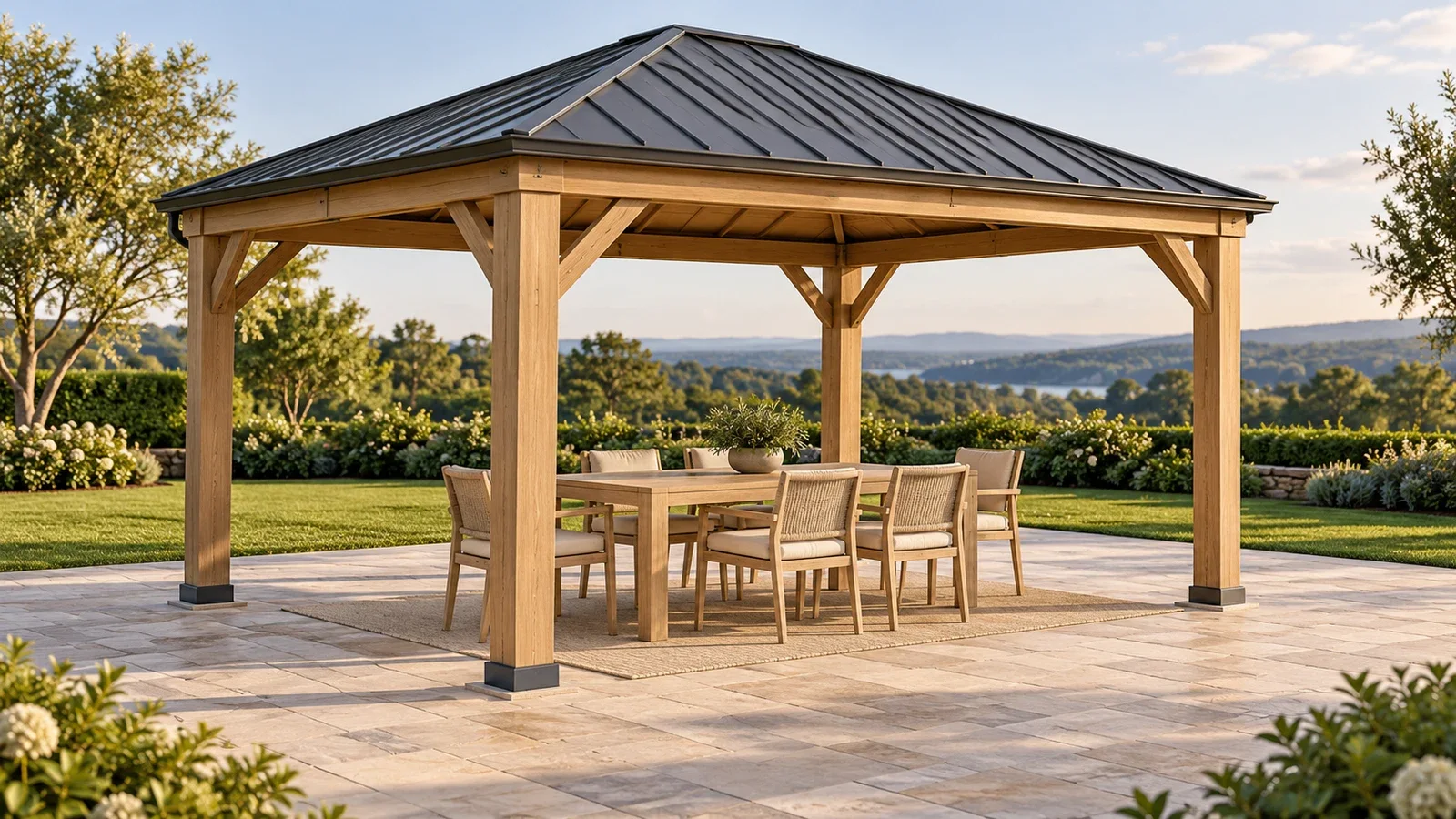
Can You Leave a Gazebo Up All Year? Winter Care and Weather Limits
Some gazebos can remain installed through winter, but the frame, roof and fabric accessories may have different requirements. Use the exact model’s instructions to plan seasonal care.
Table of contents
Ask what can stay up, not just whether the gazebo canRead wind and snow ratings with their conditionsPrepare fabric and accessories before bad weatherFollow the roof’s snow and debris instructionsSeparate weather resistance from a safe place to shelterKeep a simple seasonal record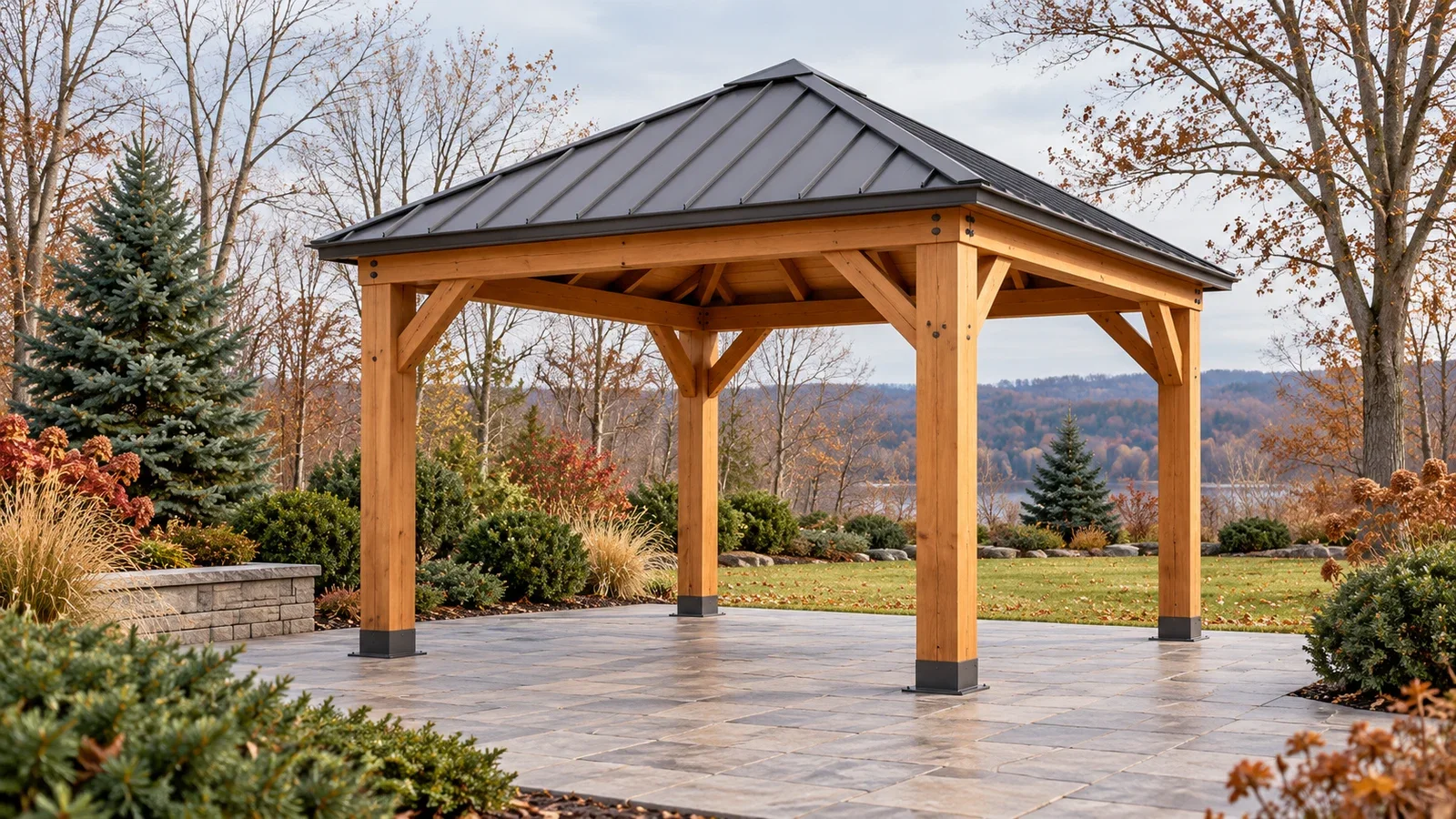
You can leave a gazebo up all year only when the exact model, installation and local conditions support that use. Some permanent hardtop kits are intended to remain installed, while fabric canopies or accessories may need removal before winter or adverse weather. A metal roof alone does not make every gazebo suitable for snow, and “all-season” does not mean maintenance-free. Check the manual for the frame, roof and accessories separately, then make a plan for inspections and any required weather preparation.
Ask what can stay up, not just whether the gazebo can
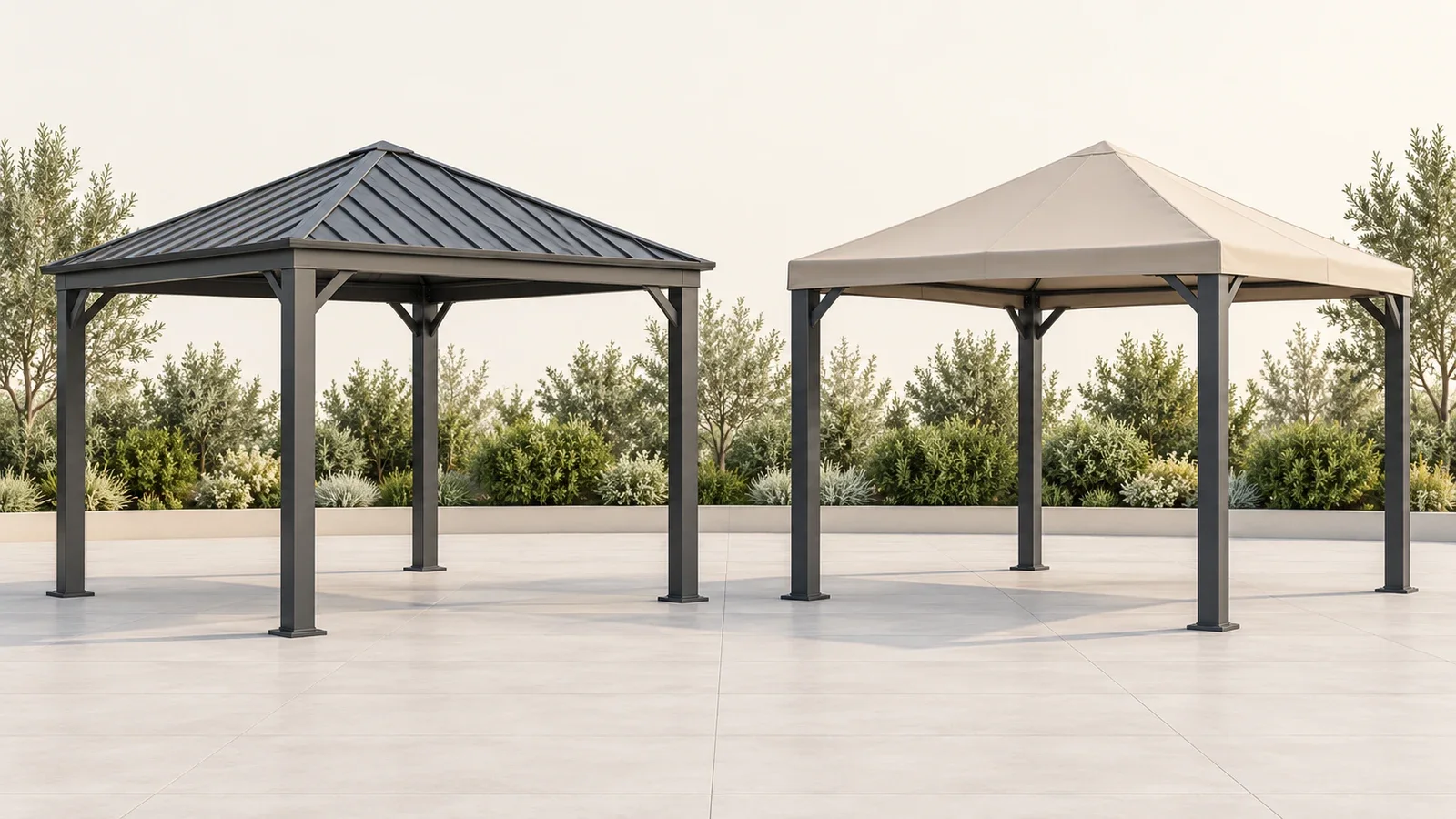
A gazebo is a combination of parts with different care needs. The frame might remain in place while curtains, netting and cushions go indoors. A fabric canopy might need removal even though some frame components remain assembled. A rigid roof may stay installed but still require debris removal and checks. Follow the model’s stated configuration rather than improvising which parts to leave behind.
Start with the model number on the product label or paperwork and obtain the current instructions. If you bought the structure secondhand or cannot identify it, photographs alone are not enough to establish a weather rating. Ask the manufacturer to identify the kit and its requirements before relying on it through winter. Missing documentation is a reason to resolve the uncertainty, not to infer a rating from similar-looking products.
| Component | Question to answer | Plan to confirm |
|---|---|---|
| Frame and base | Is year-round installation permitted? | Required support, attachment and inspection |
| Rigid roof | What weather limits and care apply? | Model-specific snow and debris procedure |
| Fabric canopy | When must it be removed? | Removal before unsafe conditions and dry storage |
| Curtains and netting | Can they stay attached in winter? | Storage or securing instructions for these accessories |
| Winter cover | Is this accessory approved for the model? | Compatibility, fitting and ongoing care |
Read the care and warranty conditions alongside the product description. If a broad marketing statement seems to conflict with the manual, ask the manufacturer to clarify the exact configuration and document the answer. Do this while conditions are calm, when there is still time to arrange any required work.
Read wind and snow ratings with their conditions
A rating belongs to a particular product and installation. Backyard Discovery’s gazebo FAQ, for example, explicitly connects wind and snow ratings with correct anchoring. A structure sitting loose on a patio does not inherit a rating simply because it is the same model as the tested product. Check the supporting base, specified attachment and complete assembly before relying on a performance claim.
Keep the units and scope of a snow rating intact. A total roof-load figure is not the same as pounds per square foot, and neither should be casually translated into a universal number of inches of snow. Wet snow and ice can place much more weight on a roof than the same depth of light, dry snow. A quoted capacity also does not cancel the manufacturer’s clearing instructions.
Wind guidance may depend on how the gazebo is installed and which accessories are fitted. Do not assume a closed curtain, added wall or improvised tarp leaves the original conditions unchanged. Ask about any proposed enclosure before installing it. A forecast below a number in an advertisement is not, by itself, a complete check of the site or structure.
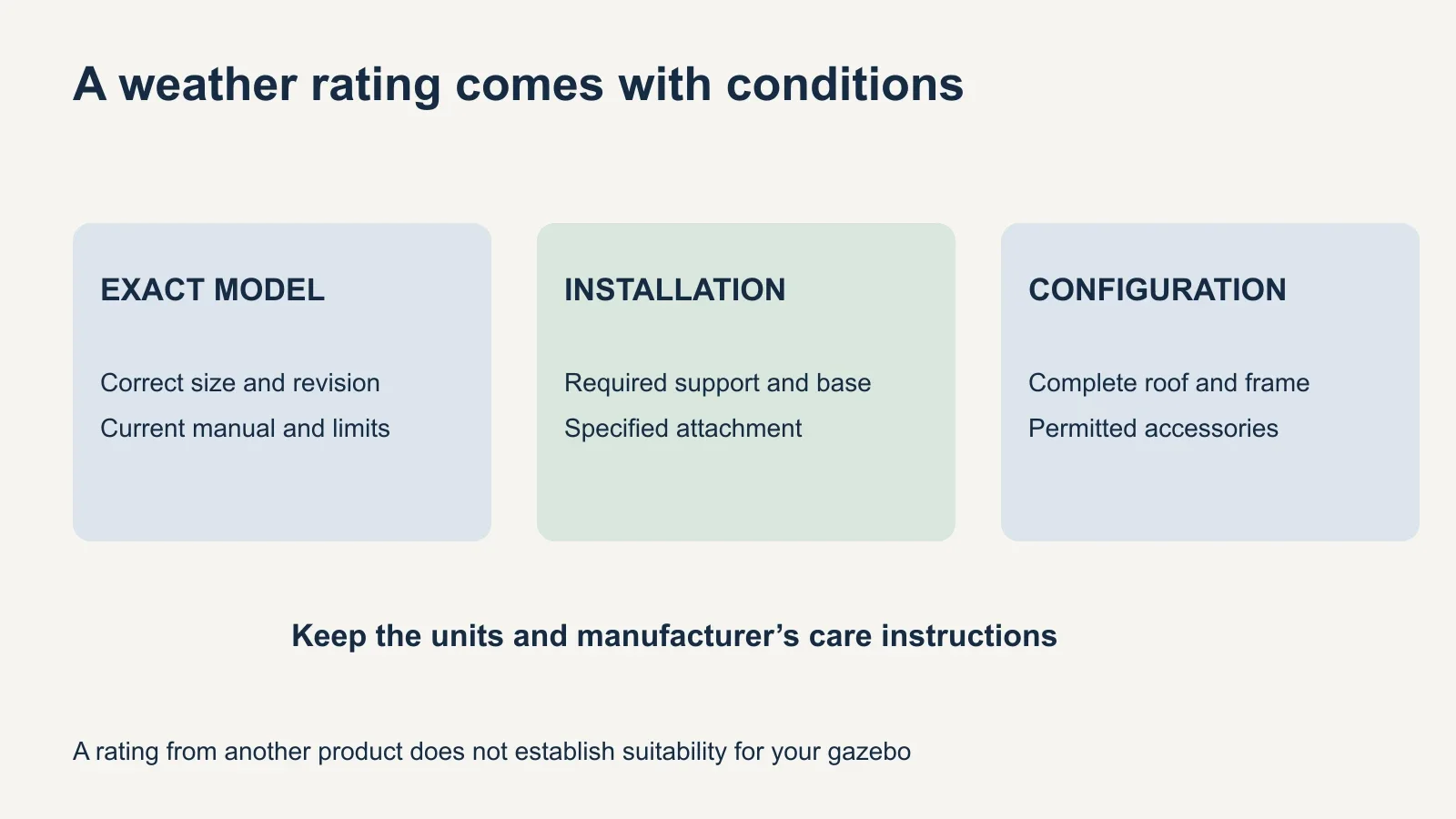
The gazebo anchoring guide explains why the attachment plan needs attention before assembly. If the frame has moved, the base is damaged or fasteners are missing, keep people away and have the problem assessed. Adding improvised weights is not a substitute for restoring the specified installation.
Prepare fabric and accessories before bad weather
For fabric-roof products, removal can be part of ordinary weather care rather than just an end-of-season task. IKEA’s gazebo guidance calls for taking off the fabric roof in windy conditions or heavy rain and cleaning and thoroughly drying it before storage. Follow the instructions for your own model and complete any required removal before hazardous weather begins.
Label the canopy, curtains, netting and their fittings as you put them away. Store them where the specified conditions can be maintained, and keep them away from sharp hardware. Inspect the fabric before next season so a torn seam or missing attachment does not become a problem during reinstallation. Do not reinstall a damaged canopy merely because the frame still looks sound.
A winter cover is a model-dependent accessory, not a universal upgrade. SOJAG’s 12-by-20-foot cover listing, for example, identifies compatible sun shelters rather than approving it for every gazebo of roughly that size. Confirm compatibility and follow its fitting and care instructions. Do not assume wrapping a soft top in a tarp turns it into a snow-rated hardtop.
Follow the roof’s snow and debris instructions
A hardtop may require snow removal even when it can stay installed. The SOJAG Dakota 8-by-8-foot product page specifically says accumulated snow should be removed from its roof. That is a useful reminder that a rigid roof does not automatically mean you can leave a snow load untouched. Use the procedure for your exact product; do not borrow a depth limit from a different brand or model.
Establish a safe maintenance method before the season. Do not climb onto gazebo roof panels or stand underneath falling snow and ice. Follow the manufacturer’s specified tools and approach, and arrange qualified help if the work cannot be done safely. Avoid improvising with sharp tools, heat or heavy blows that can damage panels, coatings or connections.
Keep drainage paths and any supplied gutters clear using the approved maintenance method. Fallen leaves can collect even where snow is rare. In a mild winter climate, rain, wind and debris may be the main concerns; that changes the maintenance priorities, not the need to follow the product instructions.
If you see bending, displaced panels, leaning posts, loose connections or a change in the base, stop using the area. Do not work beneath a visibly distorted roof or attempt to unload a damaged structure yourself. Keep people clear and seek an appropriate assessment before repair or reuse. The priority is a safe response, not preserving an outdoor appointment or gathering.
Separate weather resistance from a safe place to shelter
A gazebo that can remain standing through a season is not necessarily a safe place for people during severe weather. The National Weather Service identifies open shelters such as gazebos as unsuitable protection from lightning. If you hear thunder, move to a fully enclosed permanent building or an appropriate hardtop vehicle. Wait at least 30 minutes after the last thunder before resuming outdoor activity.
Do not use the roof’s ability to shed rain as evidence that it protects occupants from other hazards. Plan where people will go before hosting outdoors and keep that route available. Curtains or netting do not turn an open gazebo into a fully enclosed safe building. Follow local weather alerts and avoid leaving a seasonal maintenance task until a storm is underway.
Keep a simple seasonal record
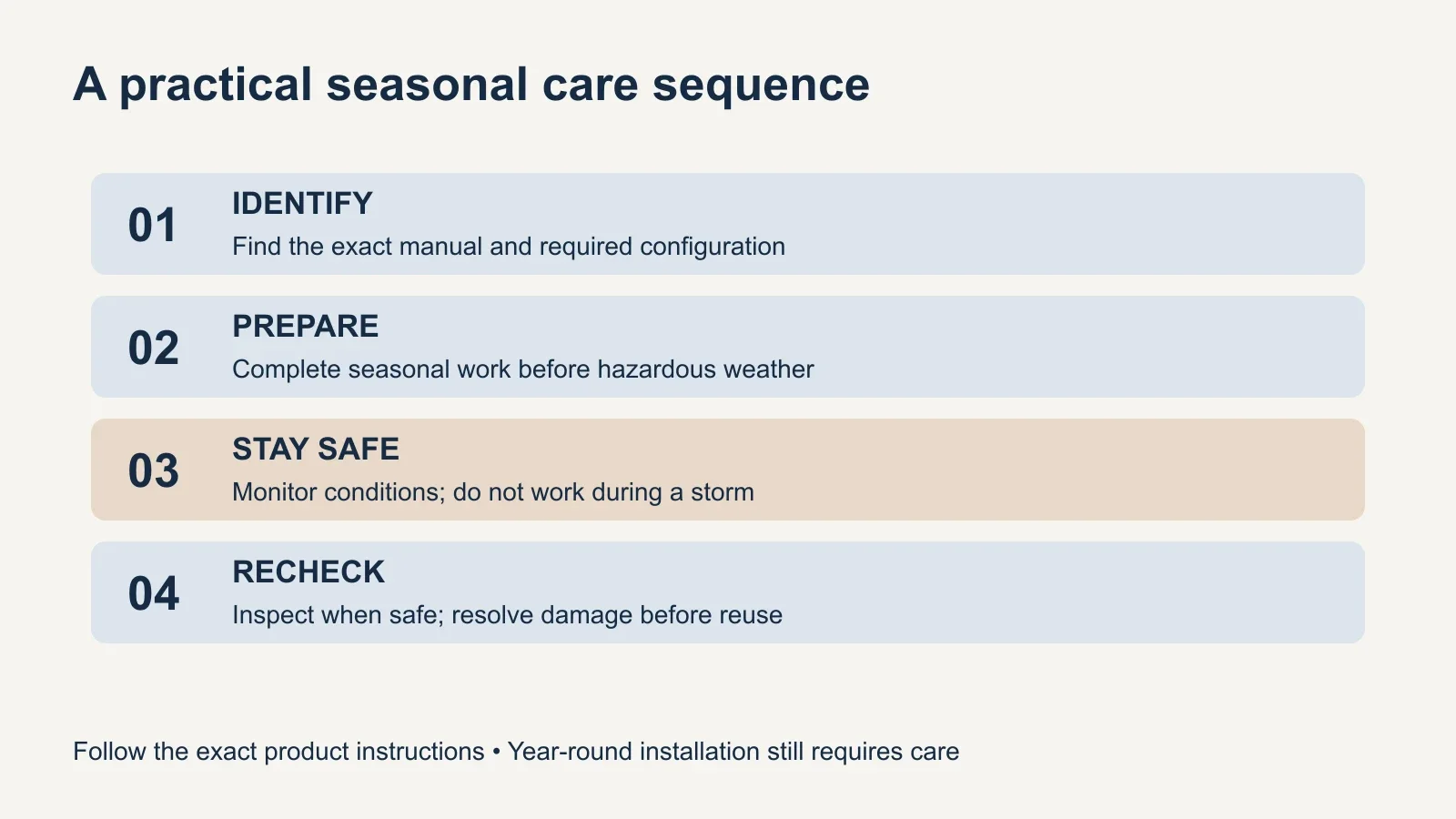
- Record the model, manual revision and manufacturer’s weather-care instructions.
- Confirm the required base, anchoring and permitted accessory configuration.
- Schedule fabric removal, cleaning and storage while conditions are safe.
- Arrange the prescribed roof care and a safe way to carry it out.
- Inspect after adverse weather once it is safe, and resolve damage before use.
- Check stored parts and the complete structure before reopening for the next season.
Keep photographs of the completed installation and notes about any changed parts, damage or manufacturer advice. A short record makes it easier to explain a concern without guessing which version of the gazebo you own. It also helps you distinguish ordinary cleaning from a repair that needs the correct replacement component.
For a new structure, use the yard preparation checklist before arranging gazebo assembly with UPTask. Share the exact model and site conditions, and confirm any separate base or anchoring work. Assembly of the supplied kit does not establish a weather rating or automatically include winter maintenance; those plans should be resolved for the product and property before year-round use.