How Many People Does It Take to Assemble a Gazebo?
Gazebo crew requirements vary by kit and by assembly step. Check the exact manual before assuming two people—or one experienced installer—will be enough.
Table of contents
Start with the exact kit, not a general size ruleLook for the step that needs the most simultaneous helpCan one person do the preparation?Does a professional crew need fewer people?Arrange the people, space and timing togetherConfirm the crew before choosing the visit
Plan for the number of people required by your exact gazebo manual, including the steps that need everyone present at once. SOJAG’s general FAQ calls for two or three people in good weather. The Yardistry YM12983X and 12×20 Meridian YM11775 manuals describe four people as the ideal team and say not to install alone. These examples show why there is no universal two-person answer.
The right headcount is not just about how many people can tighten screws. It also depends on supporting, positioning and connecting components together. Before choosing a day or accepting a quote, read the complete instructions and identify the crew requirements for frame and roof work. Manufacturer examples below were checked September 30, 2026.
Start with the exact kit, not a general size rule
Record the model number, product version and manual revision. A 10×10 metal gazebo and a 10×10 wooden gazebo can have different instructions, and two wooden kits of the same nominal size can also differ. The kit’s footprint is useful for planning space; it does not establish the number of people required for assembly.
| Source or model | Stated team guidance | How to use it |
|---|---|---|
| SOJAG general installation FAQ | 2–3 people in good weather | Check the exact product manual for individual steps. |
| Yardistry YM12983X, March 2026 manual | Ideally 4 people; do not install alone | Read the full sequence and each helper requirement. |
| Yardistry 12×20 Meridian YM11775 | Ideally 4 people; do not install alone | Plan helpers for the purchased model, not another size. |
Keep this distinction clear when reading reviews. An owner who says “I built it myself” may still have had help raising the roof. Another owner may have changed the sequence or used equipment not described in the instructions. Their story does not replace the manufacturer’s requirements for your project.
Look for the step that needs the most simultaneous help
A crew recommendation at the start of a manual is only the beginning. Read the text and helper symbols beside the individual steps. Work that looks manageable while parts are lying separately on the patio may require several people once those parts become a large frame or roof assembly.
In the March 2026 YM12983X instructions, step 18 begins by calling for all four assemblers to position and raise a large roof section. The following roof-connection step assigns a person to keep the panels supported while others work. That is a specific example of simultaneous roles: support cannot be left unattended while the same person goes to collect fasteners.
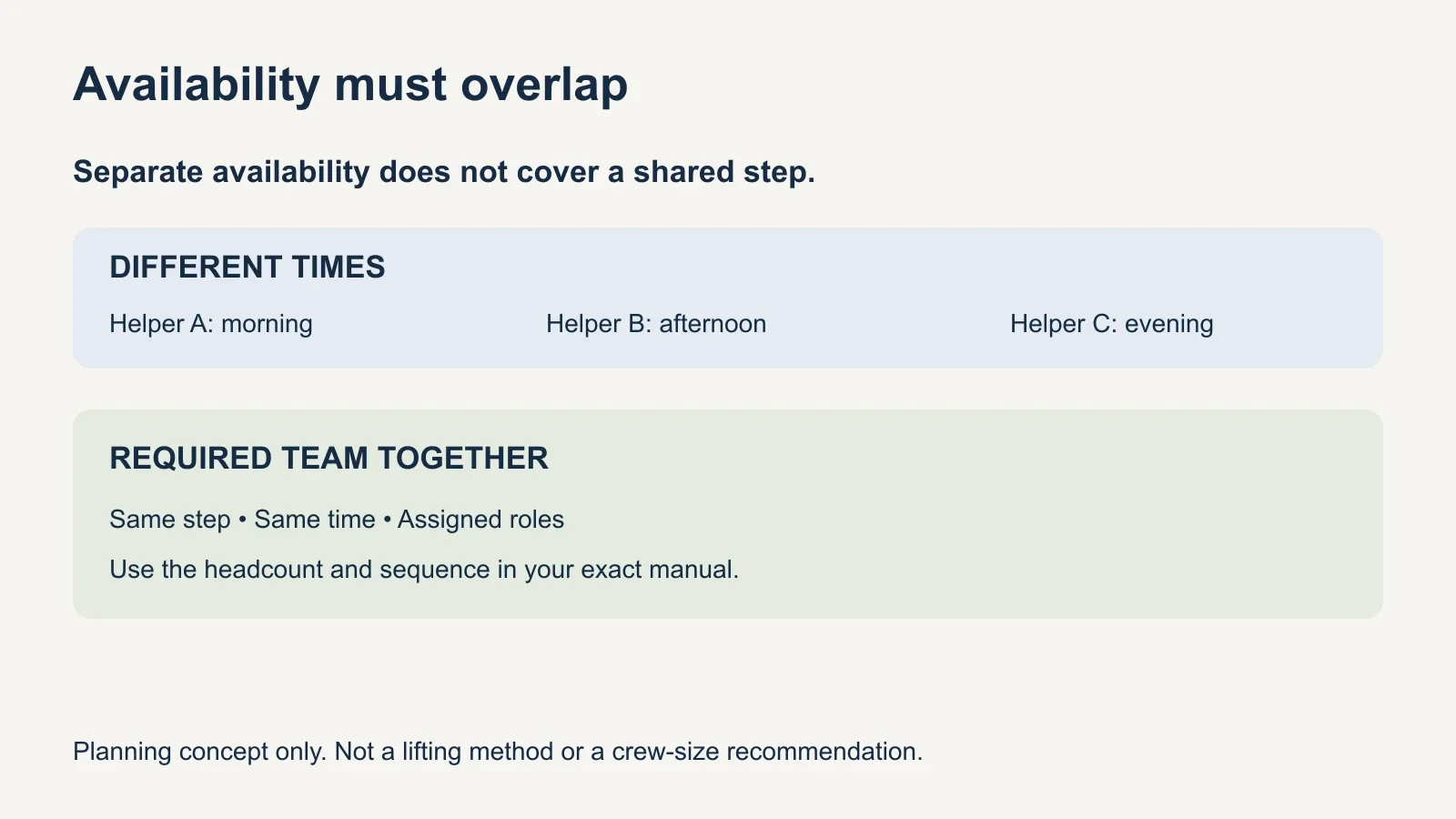
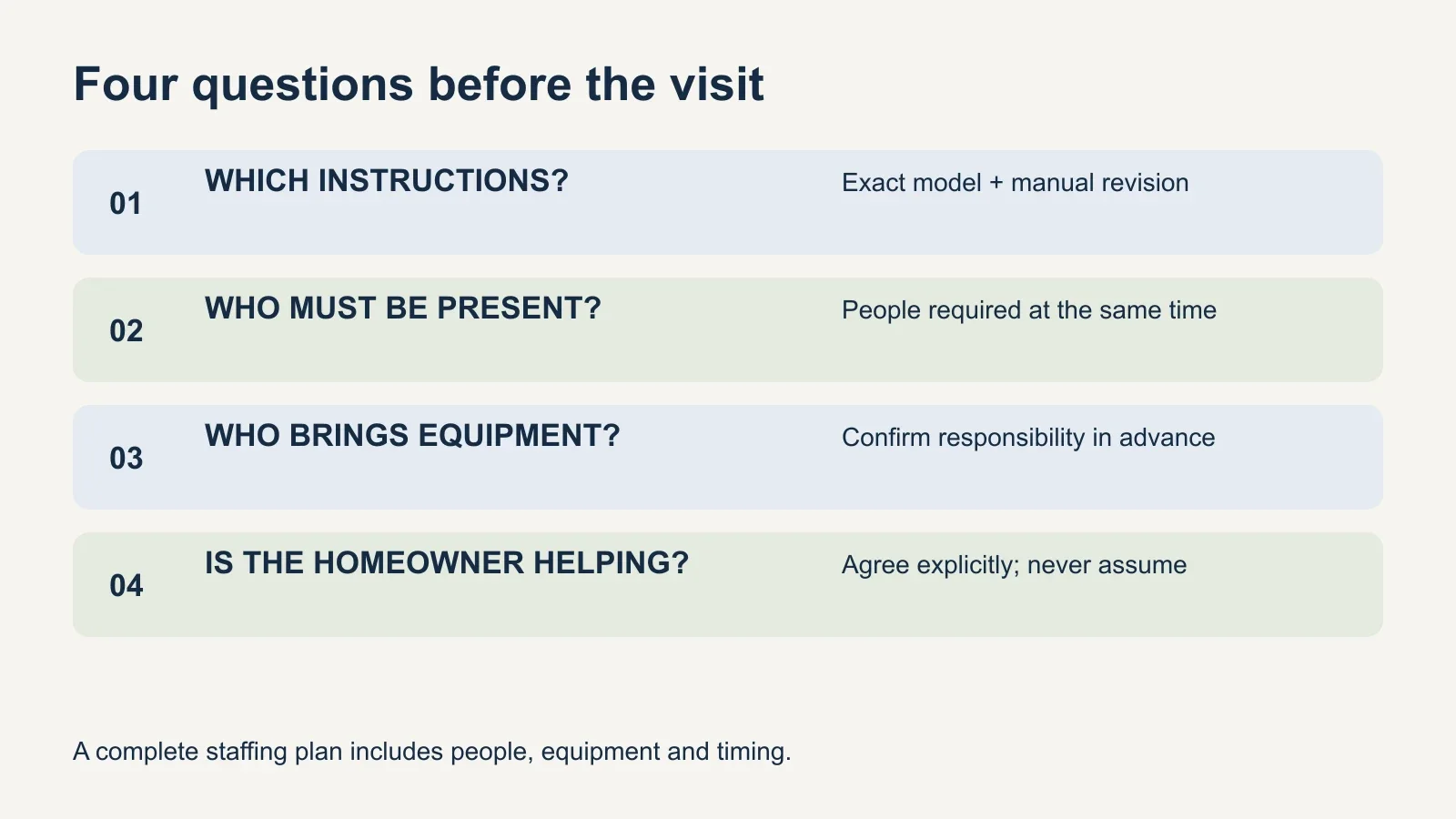
Mark these coordinated steps before inviting helpers. Ask how the team will reach them, what equipment the manual calls for and what happens if a helper is delayed. Do not start a stage that depends on someone who has not arrived. The lead assembler should decide whether the required people and setup are ready before proceeding.
Can one person do the preparation?
Some preparation can be organized separately from the build: collecting the correct instructions, recording model information, reviewing the delivery list and photographing the location. Whether unpacking or moving components is suitable for one person depends on the actual items and their handling instructions. Do not treat “preparation” as permission to move a heavy carton alone.
For a paid assembly appointment, agree on any work you intend to complete beforehand. An installer may prefer to inventory or inspect the kit personally. Major sections assembled in advance may need checking before the crew can continue, particularly if the order of operations is uncertain. A partly built roof is not automatically a useful head start.
- Keep fittings and labels associated with the correct components.
- Retain carton identification until the inventory is confirmed.
- Flag missing or damaged parts before scheduling the build.
- Leave manufacturer-required handling and coordinated assembly to the planned team.
Does a professional crew need fewer people?
Experience can improve organization and familiarity with the sequence. It does not, by itself, justify ignoring a helper requirement. If a provider proposes fewer people than the manual appears to require, ask how the exact steps will be performed and whether the manufacturer supports the proposed method. Resolve the difference before the appointment.
Do not assume the homeowner is included as unpaid lifting help. Ask whether the quoted crew supplies everyone needed or whether the provider expects you to arrange additional capable adults. If you are not available or comfortable participating, state that clearly. A booking should not leave an essential helper role undecided until the roof is ready to move.
Ask the same question about equipment. A list of tools in the manual does not mean the homeowner must supply them to a professional service, and a crew’s equipment does not automatically change the required staffing. Agree on both responsibilities explicitly. Keep the plan tied to the actual kit and work area.
Arrange the people, space and timing together
Tell helpers or the provider where components will be staged and how the work area is reached. Clear movable obstacles from the agreed route and keep children, pets and spectators outside the work zone. A group cannot perform coordinated work effectively if the required space is occupied by furniture or deliveries.
Weather and daylight are also part of the appointment plan. Confirm suitable conditions and the process for rescheduling if they change. Do not ask a smaller team to rush through a coordinated step because the remaining helpers must leave. If work pauses, follow the manufacturer’s requirements and the responsible installer’s plan for the unfinished structure.
- Identify the exact manual and read all assembly stages.
- Record the largest simultaneous helper requirement.
- Confirm who supplies the crew and equipment.
- Agree on homeowner participation, if any.
- Share access, staging and site details.
- Confirm availability and the plan for weather or delays.
Confirm the crew before choosing the visit
A useful question is: “For this model and manual, how many people will you provide, and will they be present for the steps that require them?” Follow up about equipment, attachment and any separate work. The answer gives you a clearer basis for planning than a generic promise that the gazebo is an easy weekend project.
The gazebo assembly cost guide explains UPTask’s size and roof pricing; it does not promise a particular crew size. Review gazebo assembly with UPTask with the manual and site details available so staffing and scope can be confirmed for your kit.