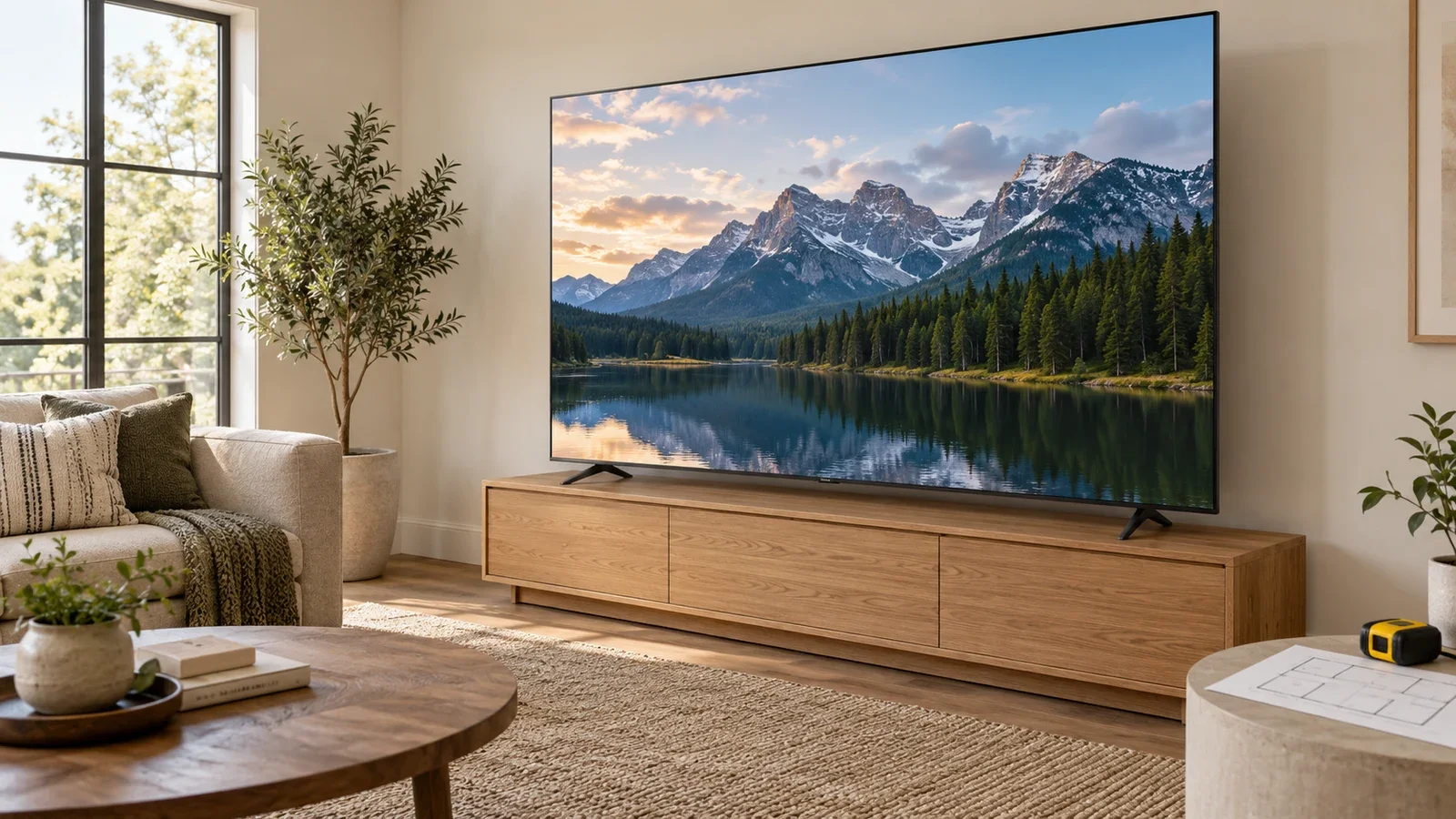
Can You Mount a TV Above a Fireplace? Height, Heat & Viewing Angle
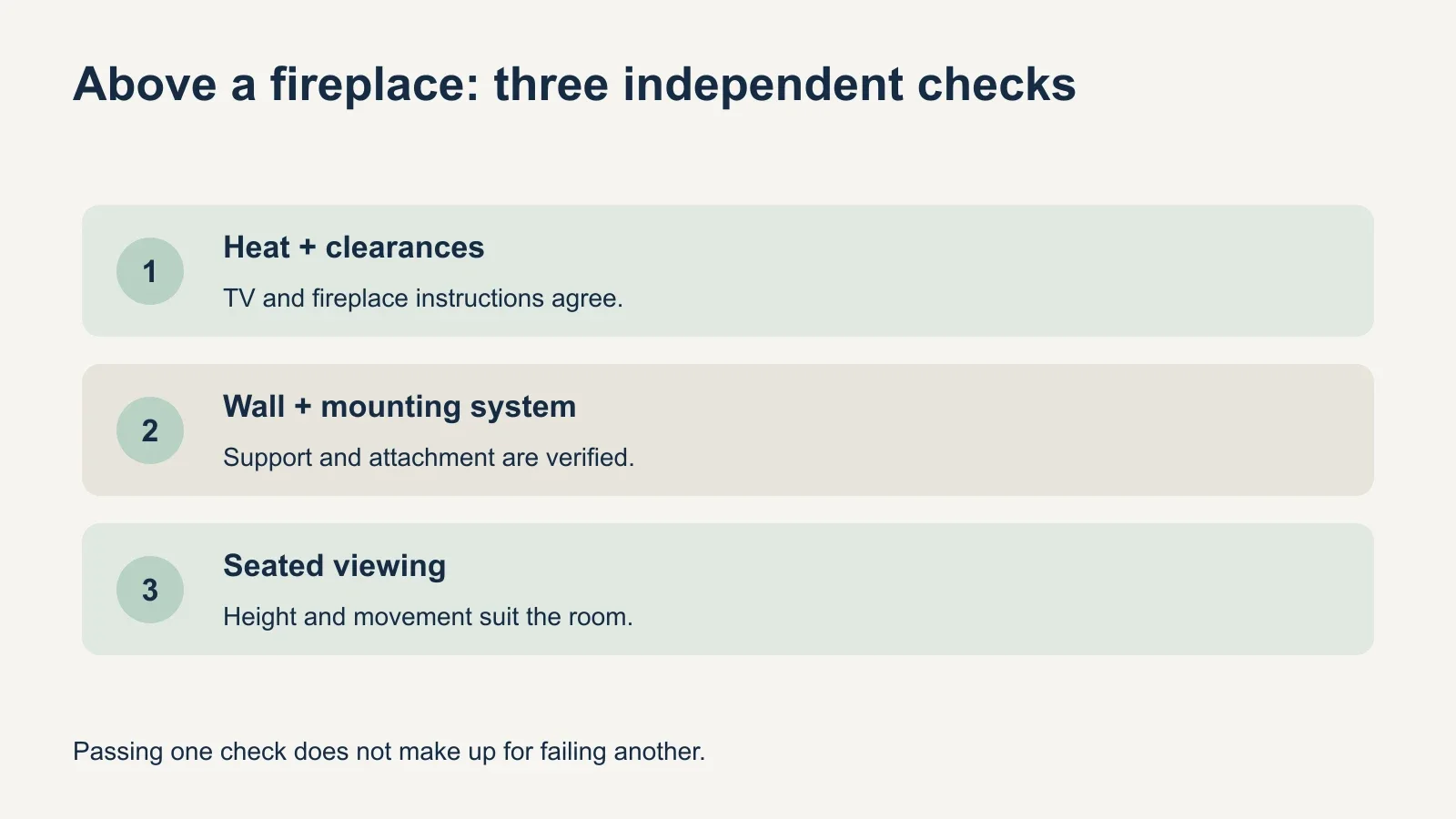
An above-fireplace TV can work only when the equipment requirements, wall support and viewing position all agree. A tilting mount does not solve excessive heat.
Table of contents
Start with the fireplace and TV requirementsMeasure the screen center from your seated positionWhat different mount styles can and cannot changeCheck what supports the mount and where cables will goTest the room layout before committing to holesChoose the location that meets all the requirements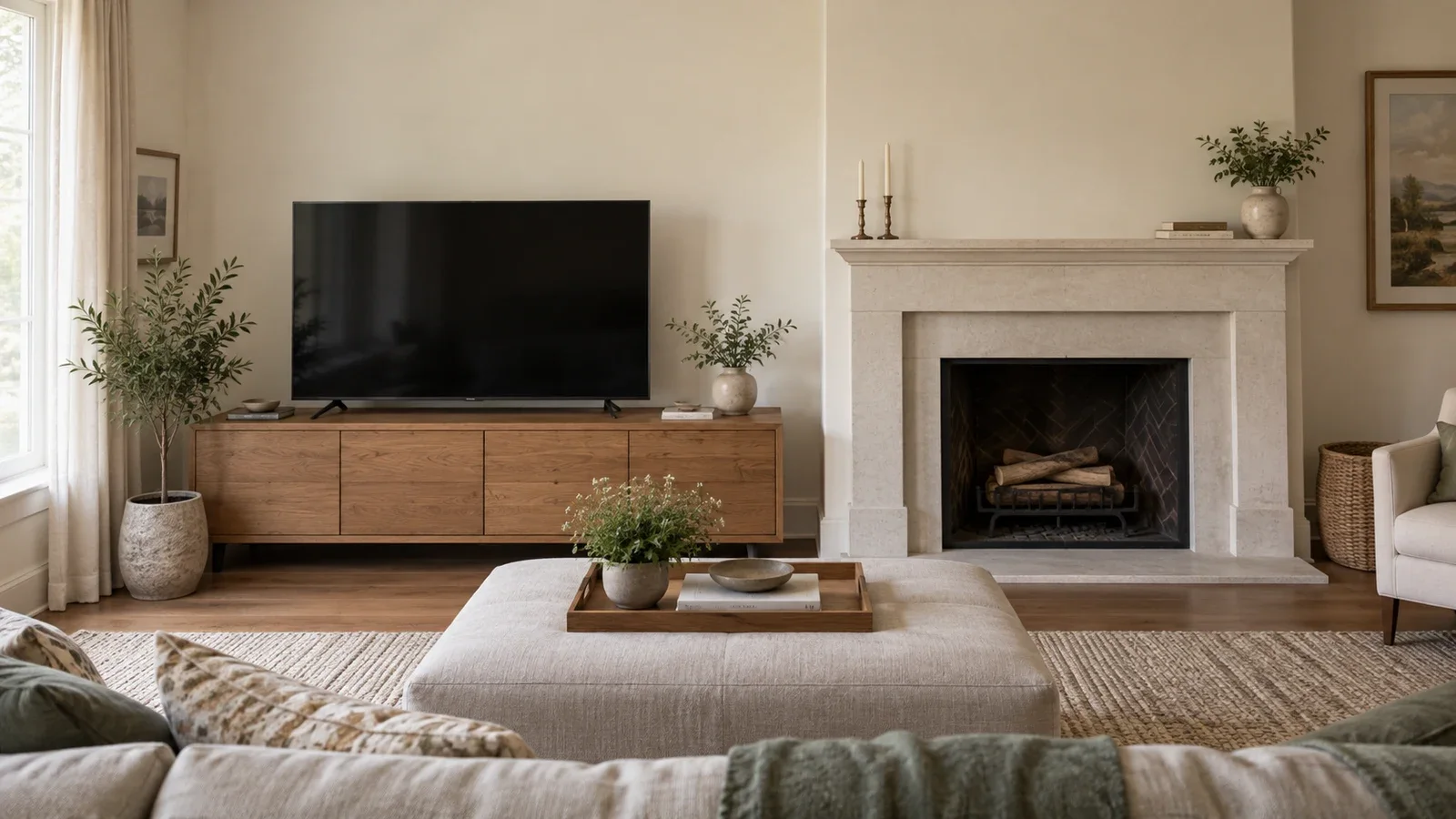
Sometimes, but only when the fireplace, television and mounting system permit the proposed setup. Heat exposure, required clearances, wall support and viewing comfort all need to work together. Samsung’s general mounting guidance does not recommend placing a TV above a fireplace. Some fireplace manufacturers offer systems designed for nearby electronics, subject to their own requirements. A mantel or a tilting bracket alone does not establish that your combination is suitable.
Start with the fireplace and TV requirements
Identify the fireplace model and the TV model before choosing a mounting height. Read the fireplace’s installation requirements for the surrounding wall, mantel and any TV arrangement, then check the television’s placement, ventilation and operating-temperature limits. Heatilator specifically emphasizes following both sets of specifications. Approval from one manufacturer does not cancel a restriction from the other.
There is no single gap above the mantel that works for every fireplace. Mantel depth, appliance design, enclosure and any approved heat-management components affect the arrangement. Do not transfer a clearance from a photograph, another fireplace or a generic diagram to your own equipment.
Heat & Glo describes engineered systems that redirect fireplace heat, with selection tied to the fireplace design and installation by a hearth professional. Those systems are part of a planned installation. They are not evidence that adding a decorative shelf to an existing fireplace will provide equivalent protection.
Ask a qualified fireplace professional how the proposed location will be assessed under the appliance’s operating conditions and the TV’s limits. A wall that feels cool while the fireplace is off tells you little about operation. If the requirements cannot be met, choose another TV location rather than relying on occasional fireplace use.
Measure the screen center from your seated position
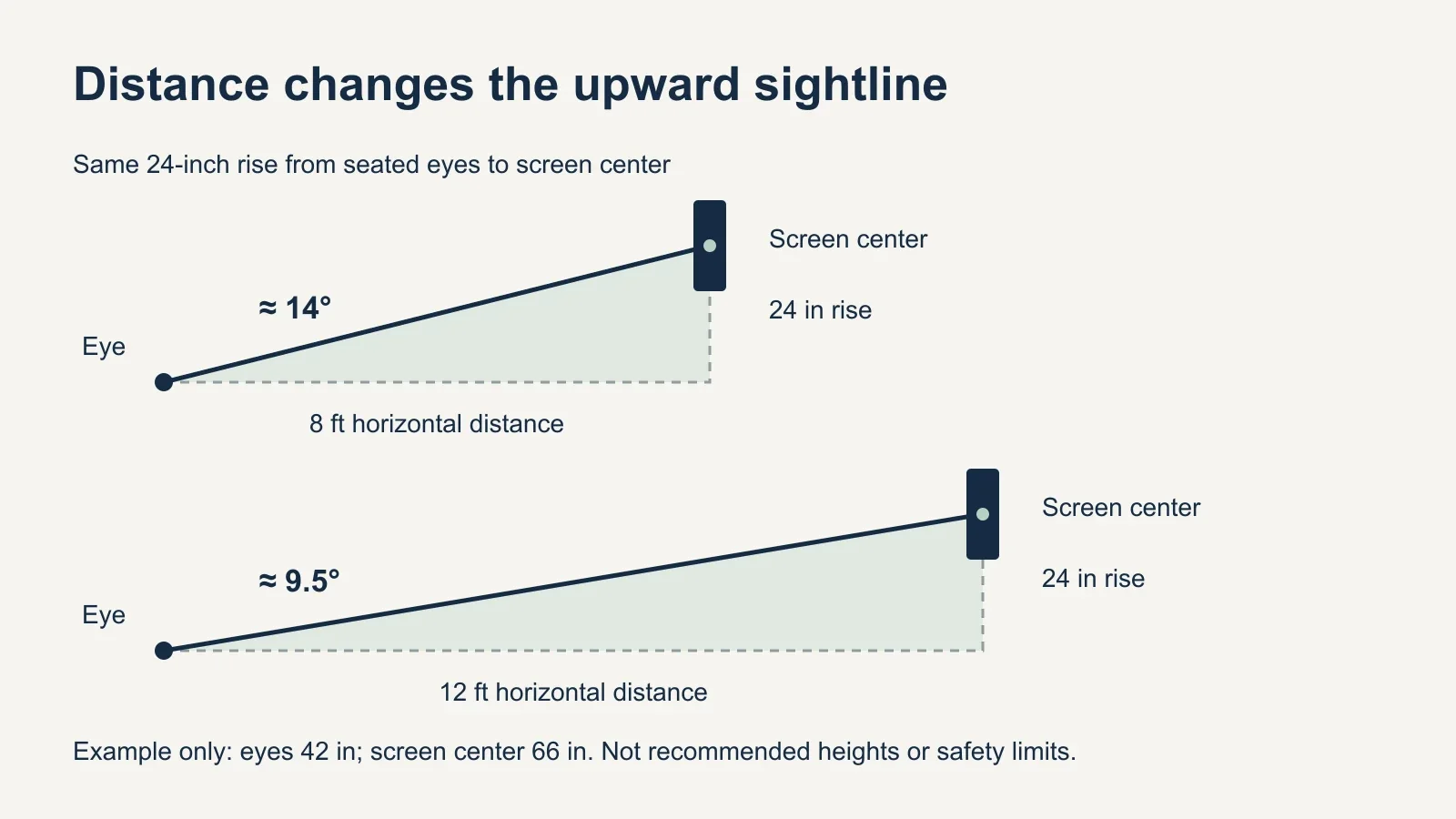
A fireplace often places the television higher than the natural line of sight from a sofa. Measure eye level while sitting in your usual posture, then compare it with the proposed screen center. The center matters more for this comparison than the top edge or the height of the wall bracket.
Consider a hypothetical layout with seated eyes 42 inches above the floor and the TV center at 66 inches. The screen center is 24 inches higher than the eyes. At an 8-foot horizontal viewing distance, the upward sightline is about 14 degrees; at 12 feet, it is about 9.5 degrees.
Those figures illustrate geometry, not recommended heights or comfort thresholds. Moving farther away reduces the upward angle but also makes the screen appear smaller. Test the actual position from every regularly used seat, including a recliner in its normal position, rather than choosing a height from a room photograph.
What different mount styles can and cannot change
| Mount type | What it changes | What still needs checking |
|---|---|---|
| Fixed | Keeps the TV in one position | The selected height and viewing direction must work as installed. |
| Tilting | Angles the screen toward the seating | It does not meaningfully lower the screen center or remove heat exposure. |
| Full-motion | Adds extension and swivel, depending on the model | Movement, wall support and cable clearance need review. |
| Pull-down | Lowers the TV within a specified travel range | Check fireplace-use restrictions and clearance throughout the movement. |
Tilting can help aim the display toward a lower seat, but you still look upward at a screen that remains high. A conventional articulating arm also should not be assumed to offer vertical lowering. Compare the actual model’s movement with the problem you are trying to solve.
A pull-down mount changes the viewing height, but it introduces a moving screen near the fireplace. MantelMount’s FAQ advises against keeping its TV in the lowered position while the fireplace is on. Follow the exact product’s operating restrictions, including the travel path and clearance around the mantel.
Check what supports the mount and where cables will go
The wall above a fireplace may have framing, masonry, a facing material or a combination of layers. Its appearance does not identify the attachment method. Confirm the supporting construction and the mount’s approved installation before drilling. Any uncertainty about concealed fireplace components or venting belongs in the professional assessment.
Plan power, signal cables and device placement at the same time. A mantel is not automatically a suitable home for a cable box or game console. Keep each device’s ventilation and temperature requirements in the plan, and make sure cables can accommodate the intended mount movement.
UPTask lists surface plastic cable covers as an option. Other routing or a new outlet requires separate assessment, particularly around a fireplace enclosure. Confirm the route and scope in advance; an above-fireplace mounting selection should not be treated as authorization to modify the fireplace or electrical installation.
Test the room layout before committing to holes
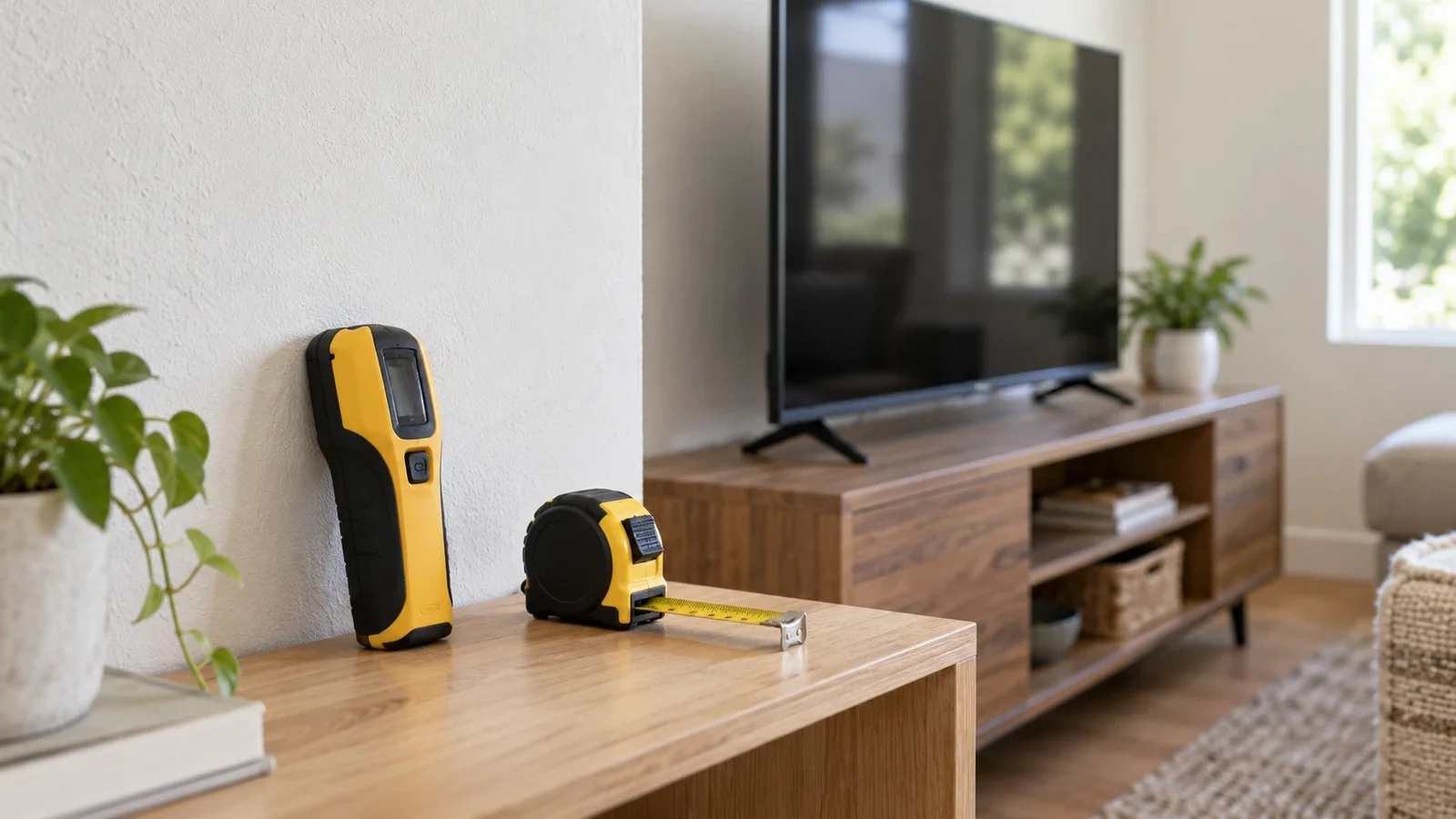
- Collect the TV, fireplace and mount model numbers and manuals.
- Record mantel height and depth, available wall area and preferred screen size.
- Measure seated eye level and the distance to the proposed screen center.
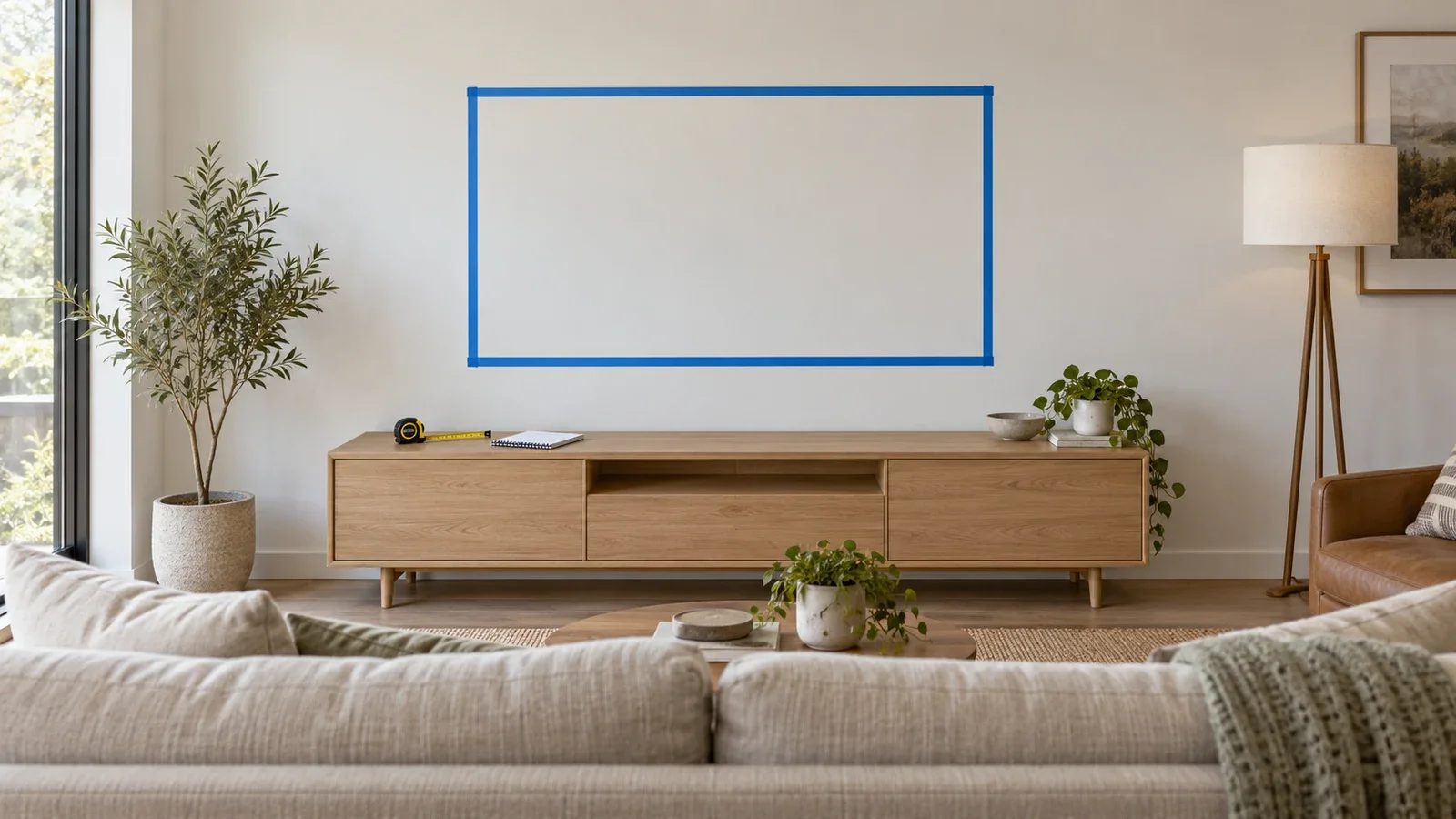
- Use a removable paper outline to compare the position from your seats, with the fireplace off.
- Ask the installer and fireplace professional to resolve heat, support and clearance questions.
- Confirm cable treatment, soundbar placement and any separately required work.
A paper outline is a viewing-position test, not a heat test or a mounting template. Keep it away from an operating fireplace and remove it after the comparison. Check whether you are comfortable looking toward the intended center without changing your normal seated posture just to make the layout work.
For a moving mount, include the TV’s full dimensions, any attached soundbar and the proposed lowered position. Ask how the installer will verify movement and cable clearance. Do not assume that a bracket advertised for the screen size will automatically clear your particular mantel.
Choose the location that meets all the requirements
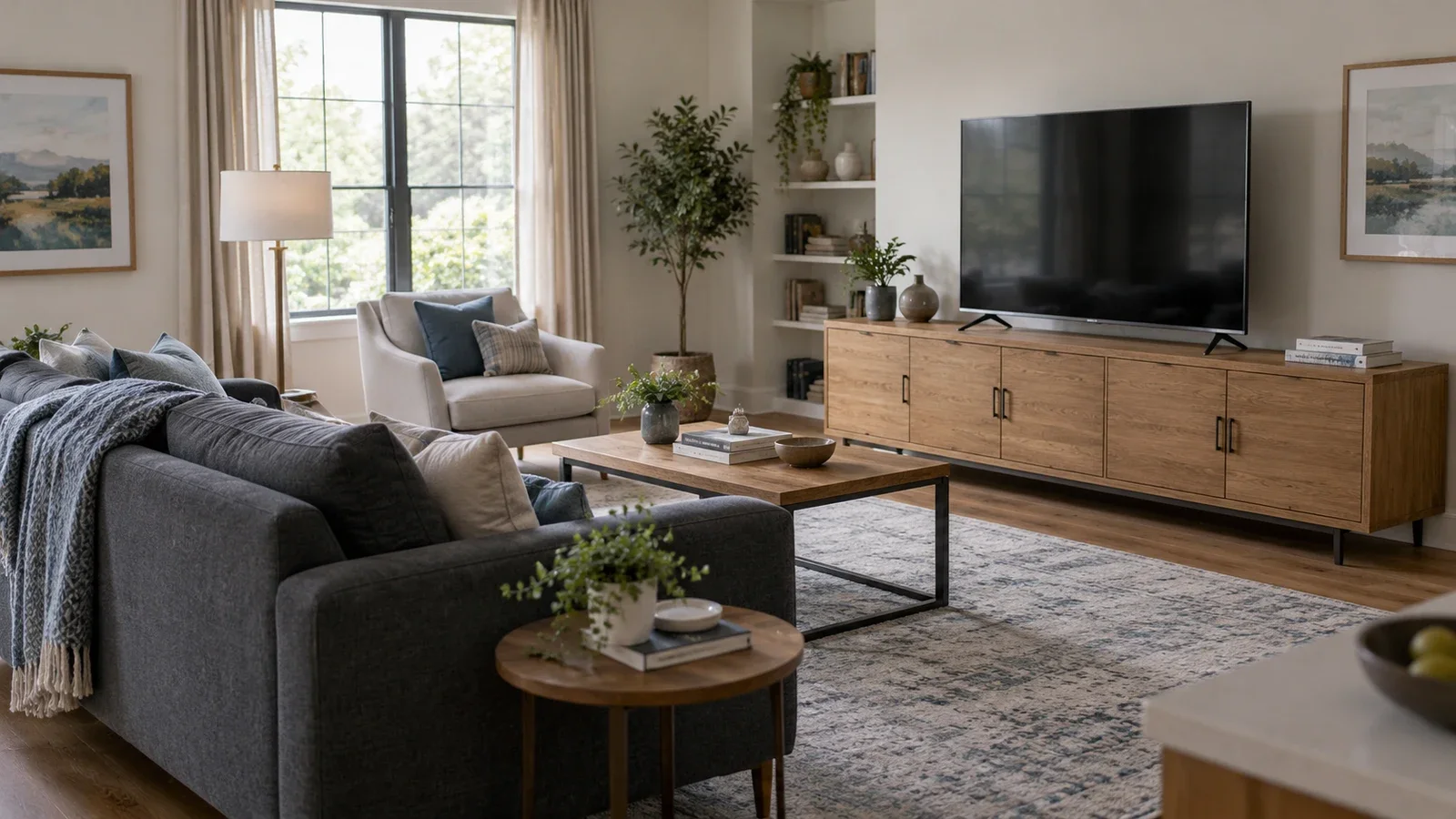
An adjacent suitable wall or a compatible TV stand may produce a more comfortable room layout with fewer unresolved heat questions. Compare those options when the fireplace forces the screen too high or the equipment instructions rule out the intended position. The visual appeal of one central feature should be weighed against how the room will actually be used.
If the above-fireplace position remains suitable after assessment, review UPTask’s TV mounting service with your equipment models, wall photos and selected extras. Confirm that the agreed configuration addresses heat, attachment and viewing position before scheduling the installation.