How High Should a Bedroom TV Be Mounted?
A bedroom TV needs a placement test from the bed, not a copied living-room measurement. Use your usual posture and furniture to choose and document the screen position.
Table of contents
Use your normal posture as the starting pointTest an outline before committing to holesCheck what blocks the lower part of the screenChoose adjustments that solve the actual viewing problemRecord the screen position, not just “high on the wall”Prepare the bedroom for the installation visit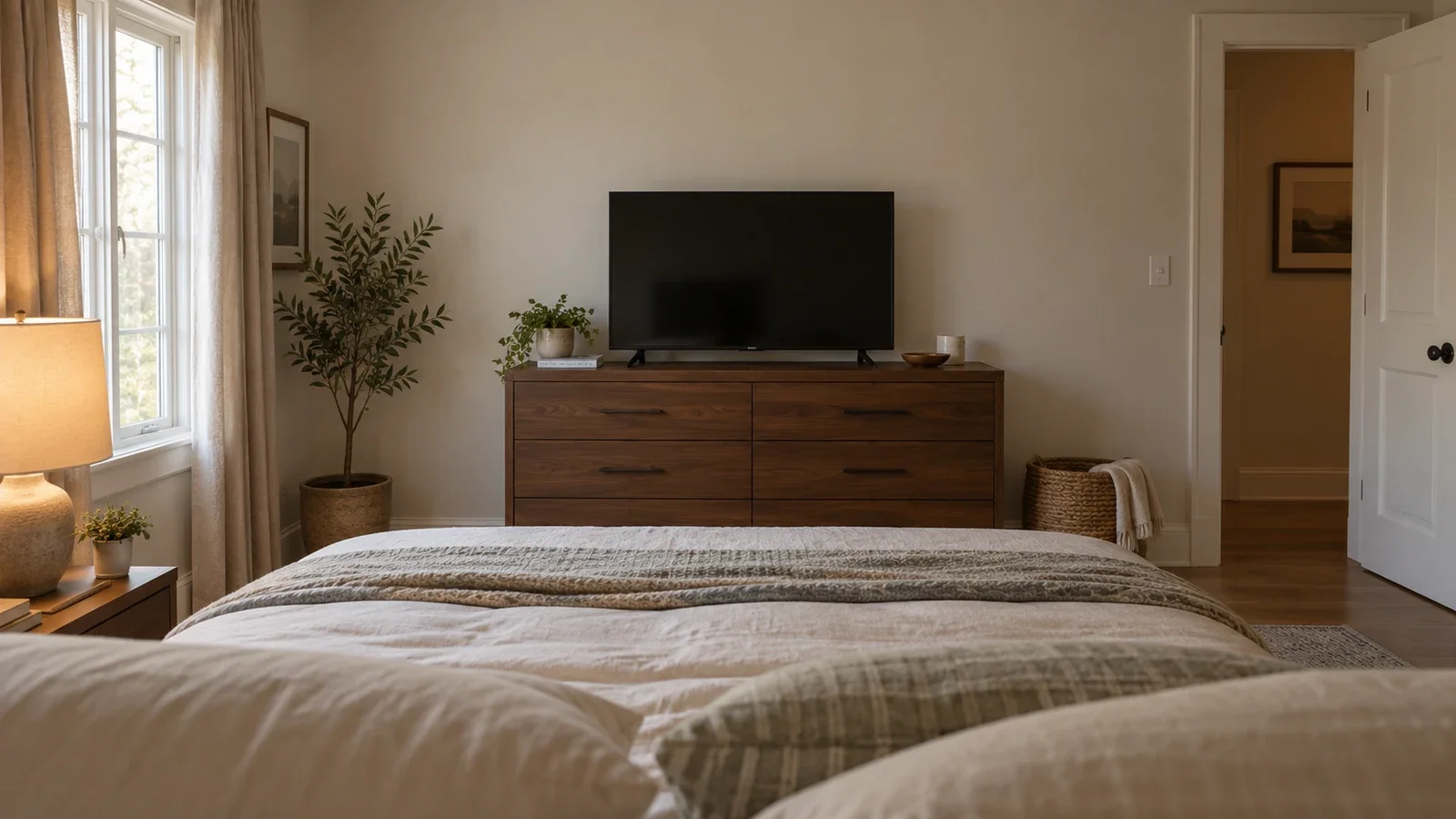
Choose a bedroom TV height from the position in which you actually watch it. Sit or recline with your usual pillows, identify a comfortable screen-center position, and check that the full picture clears the footboard, bedding and furniture. A bedroom TV may sit higher than a living-room TV, but there is no single floor-to-center measurement that fits every bed, viewer and room layout.
Use your normal posture as the starting point
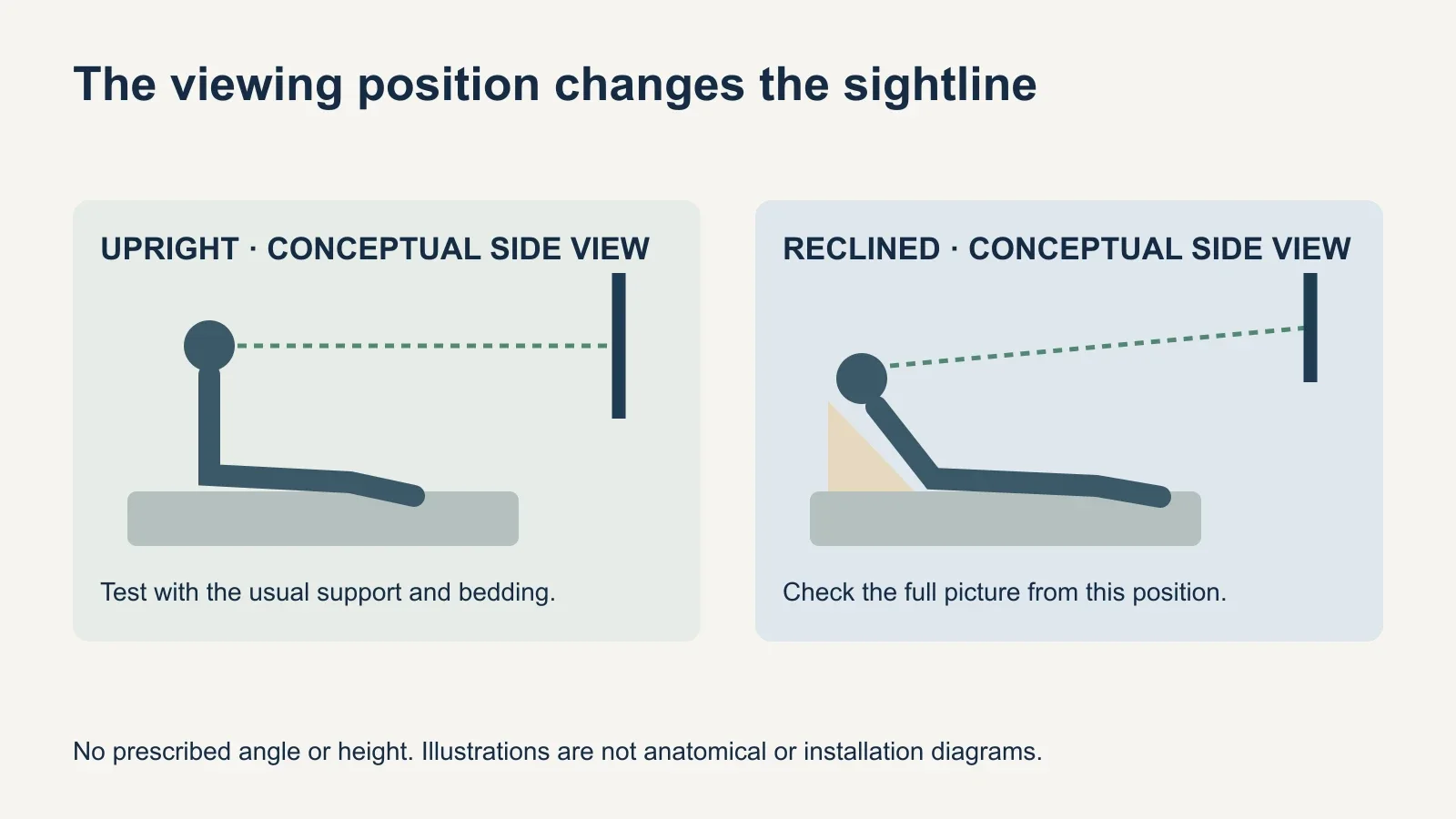
A low bed with a nearly upright viewer and a tall bed with a reclined viewer create different sightlines. Mattress thickness, pillow support and an adjustable bed’s position all matter. Measure with the bed arranged for viewing, rather than estimating from the bare mattress or sitting unusually straight for the test.
Your eye height above the floor is useful information, but it is not the whole answer when you recline. The direction you naturally face also changes. Treat a candidate position as something to try from the bed, not a number that must match your eye height exactly regardless of posture.
SANUS’s bedroom guidance recommends having one person use the bed while another helps identify the TV location. That is a practical starting method. Avoid copying a photograph of another bedroom: a similar-looking wall may have a different bed height, viewing distance and dresser arrangement.
Test an outline before committing to holes
- Arrange the bed, pillows and adjustable base as you normally use them for viewing.
- Have a helper mark a candidate screen center with a removable method suitable for the wall finish.
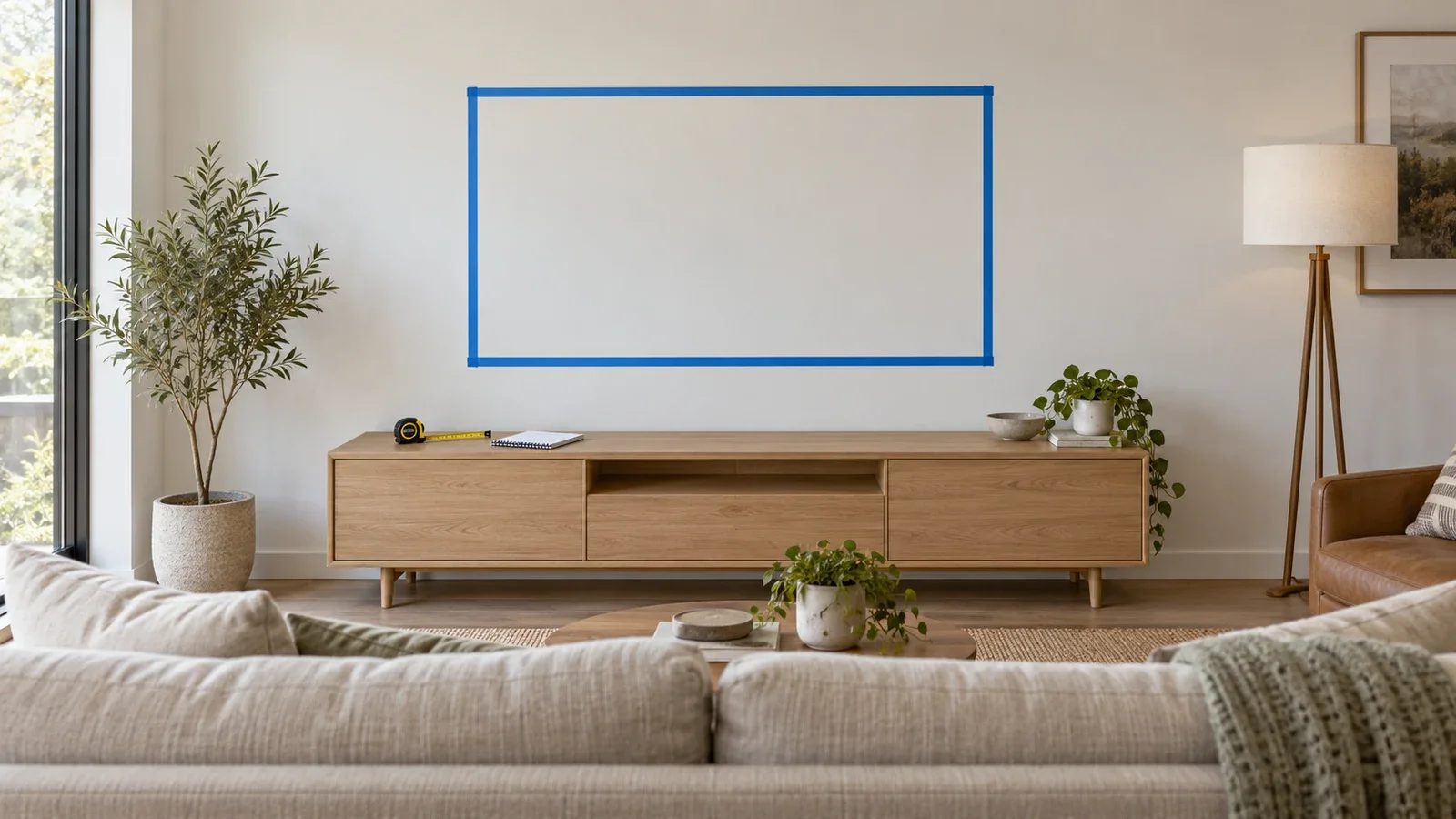
- Outline the actual TV’s outside dimensions around the intended position.
- Check the whole rectangle, especially its lower edge, from your normal posture.
- Repeat from the other regular viewer’s side and any secondary position that matters.
- Record the agreed center and edge heights before discussing the bracket layout.
Use a light paper or tape outline rather than asking someone to hold a heavy television in position. Check the outline long enough to notice whether you keep changing your posture to see it. If the position feels awkward, adjust the layout before treating a particular mount as the solution.
For two regular viewers, test both positions. A screen centered geometrically on the wall may be far to one side of one person’s usual view. A small placement adjustment or an appropriate swivel function may help, but the final location still needs to suit the wall and the TV’s usable viewing angles.
Check what blocks the lower part of the screen
| Room feature | What to observe | Possible planning response |
|---|---|---|
| Footboard or raised bedding | Whether the lower picture is hidden | Test another height or location |
| Dresser below the TV | TV edge, equipment clearance and surface items | Compare a lower dresser or revised placement |
| Adjustable bed | Sightline through the positions you use | Test the relevant bed settings |
| Side-wall location | Whether viewing requires an awkward turn | Consider a better wall or suitable swivel |
| Narrow walkway | Screen projection when the mount moves | Limit travel or choose another layout |
Do not compare only the top of the footboard with the TV’s bottom height. An object between you and the wall can interrupt the viewing line even when the measurements seem plausible in isolation. Check from the pillow position with ordinary bedding in place, including the raised foot section of an adjustable bed if you use it.
A dresser can force a higher placement than you prefer. Before raising the screen, consider whether the furniture can move or a lower piece would work. Keep the TV’s required ventilation and any soundbar’s clearance in the plan. Decorative items on top of the dresser count as potential obstructions too.
Choose adjustments that solve the actual viewing problem
A tilting mount can angle the screen toward the viewing position when the TV is directly across from the bed. A full-motion design may add the sideways adjustment needed for an offset location. Neither feature establishes a comfortable height on its own: test the location first, then compare compatible models for the required movement.
Check the TV’s edges against the wall, furniture and room traffic through the intended range. A bracket’s advertised swivel angle is not necessarily achievable with every screen width. In a narrow bedroom, an extended panel may project into the route between the bed and dresser even though it fits neatly when retracted.
Confirm that power and signal cables can follow the movement without pulling tight or catching in the mechanism. Decide where connected devices will sit. A streaming setup and a console-and-soundbar setup may need different connection access even when the TV position is identical.
Record the screen position, not just “high on the wall”
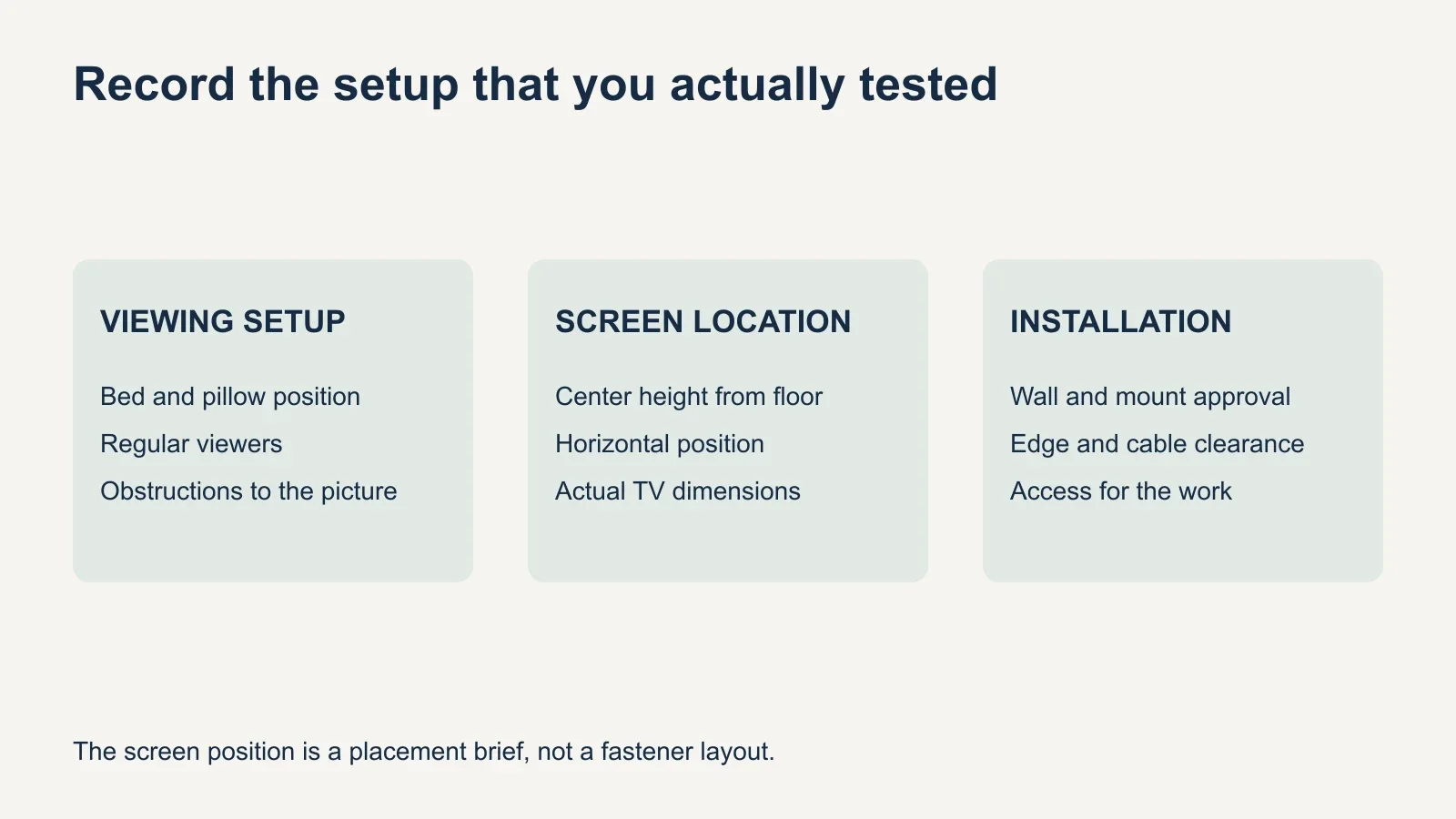
Write down the floor-to-screen-center height, the intended horizontal position and the actual TV dimensions. Keep the reference point explicit. A measurement to the bottom edge is not interchangeable with one to the center, and neither identifies the mount’s drill holes.
For example, two bedrooms could have the same candidate screen-center height but different results because one viewer is upright and the other is reclined behind a tall footboard. That is why a size-based height chart cannot replace the room test. The relevant outcome is a usable view of the entire picture in the position you normally use.
The TV’s mounting-hole location and the bracket geometry determine where the wall plate belongs. Have the installer verify the wall structure and approved attachment method separately. Do not assume existing holes from a previous television will place the new screen at the agreed height.
Prepare the bedroom for the installation visit
Share the TV and mount models, room photos, proposed screen outline and viewing preferences in advance. Clear access to the wall and agree on any furniture movement needed for the work. The article on TV mounting appointment time explains why room access and setup can affect the visit.
If the wall or room cannot accommodate the preferred setup, consider another location or a compatible freestanding arrangement. When booking UPTask TV mounting, confirm the screen position, cable treatment and any additional work. The useful target is a bedroom setup you have tested, with an installation suited to the actual equipment and wall.