Will an Adjustable Base Fit Your Existing Bed Frame?
Keep the bed frame you like by checking the exact base dimensions, support arrangement, finished height, and moving clearance before ordering.
Table of contents
Measure the usable interior, not the mattress labelDecide which structure will carry the loadCheck the frame, base, and mattress as one systemCalculate height and check the full range of movementSend the seller a complete compatibility questionPrepare for an installation that can be checked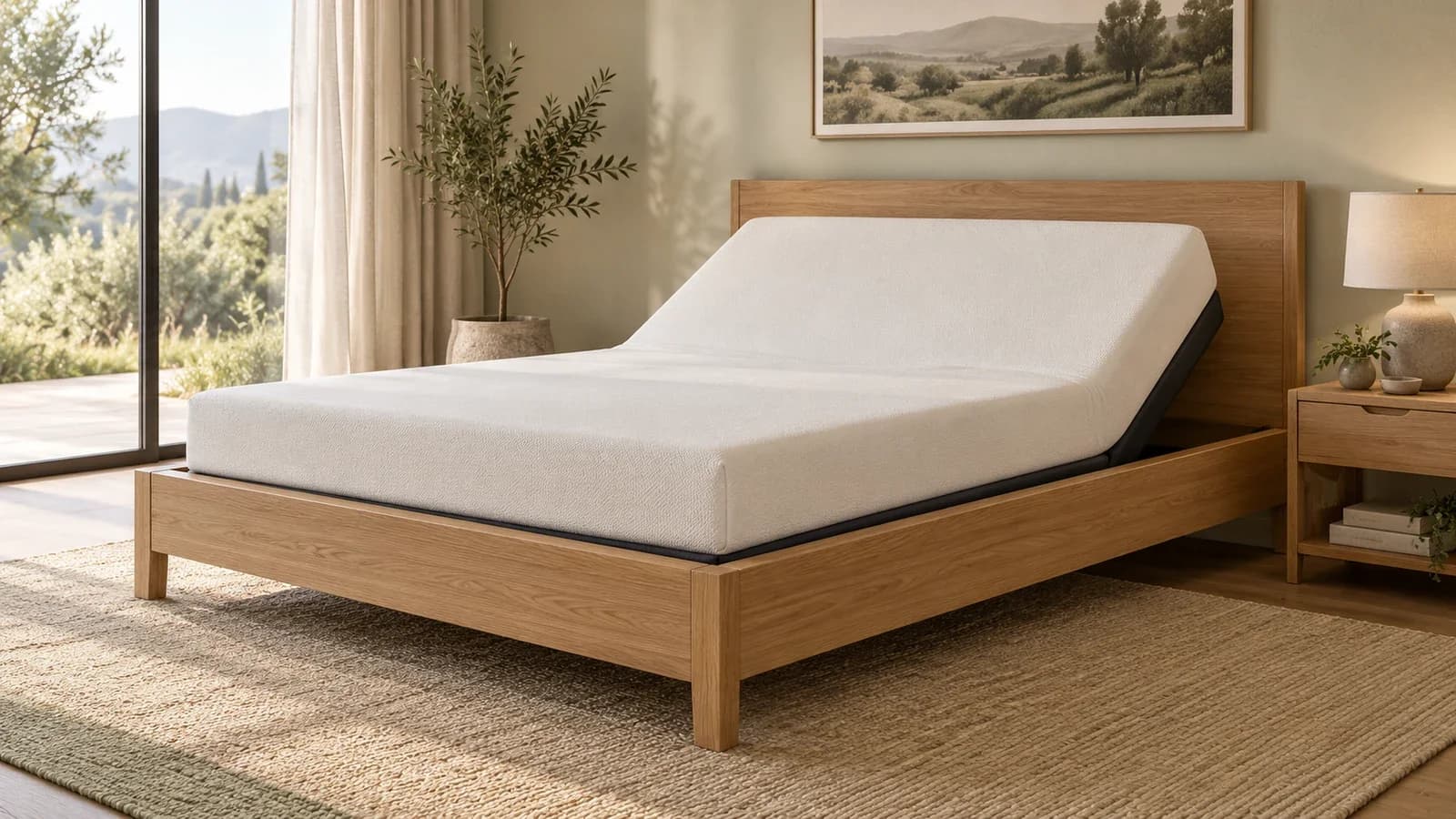
An adjustable base can work with an existing bed frame when its dimensions, support arrangement, and moving parts are compatible with that frame. Compare the frame’s usable interior with the exact base model, then confirm whether the base stands on its own legs or is approved to rest on the existing platform. Also check the mattress. Matching Queen or King labels is only a starting point.
Measure the usable interior, not the mattress label
Find the bed frame’s model and assembly instructions before taking measurements. Record the clear width between side rails and the clear length between the head and foot ends. Measure at the height where the adjustable base will actually sit. Upholstery, corner brackets, ledges, and inward-sloping panels can reduce the usable opening even when the top edge looks generous.
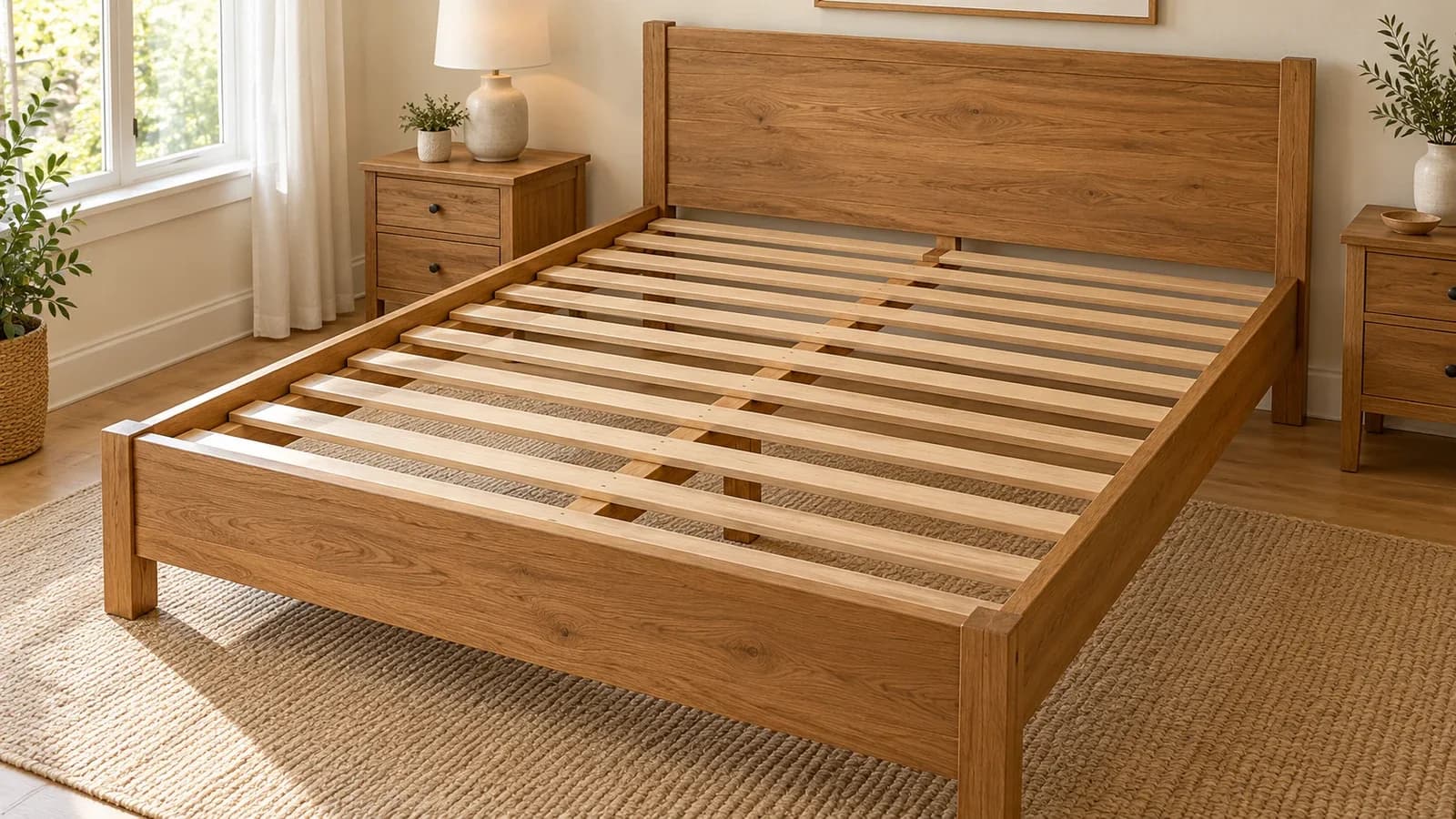
Photograph the inside corners and support system. Record where cross rails, a center beam, drawers, and support legs are positioned. For a base that stands on the floor, its legs must land without colliding with existing frame parts. For a platform-supported installation, you need the platform dimensions and structural requirements as well as the opening size.
Tempur-Pedic’s US fit guide, checked October 24, 2026, lists a Queen power-base footprint of 59½ by 79½ inches and cautions that individual bases can vary. It recommends comparing the inside of the furniture with the selected base’s dimensions. Use that as a reason to obtain a model-specific drawing, not as a measurement for every Queen adjustable base.
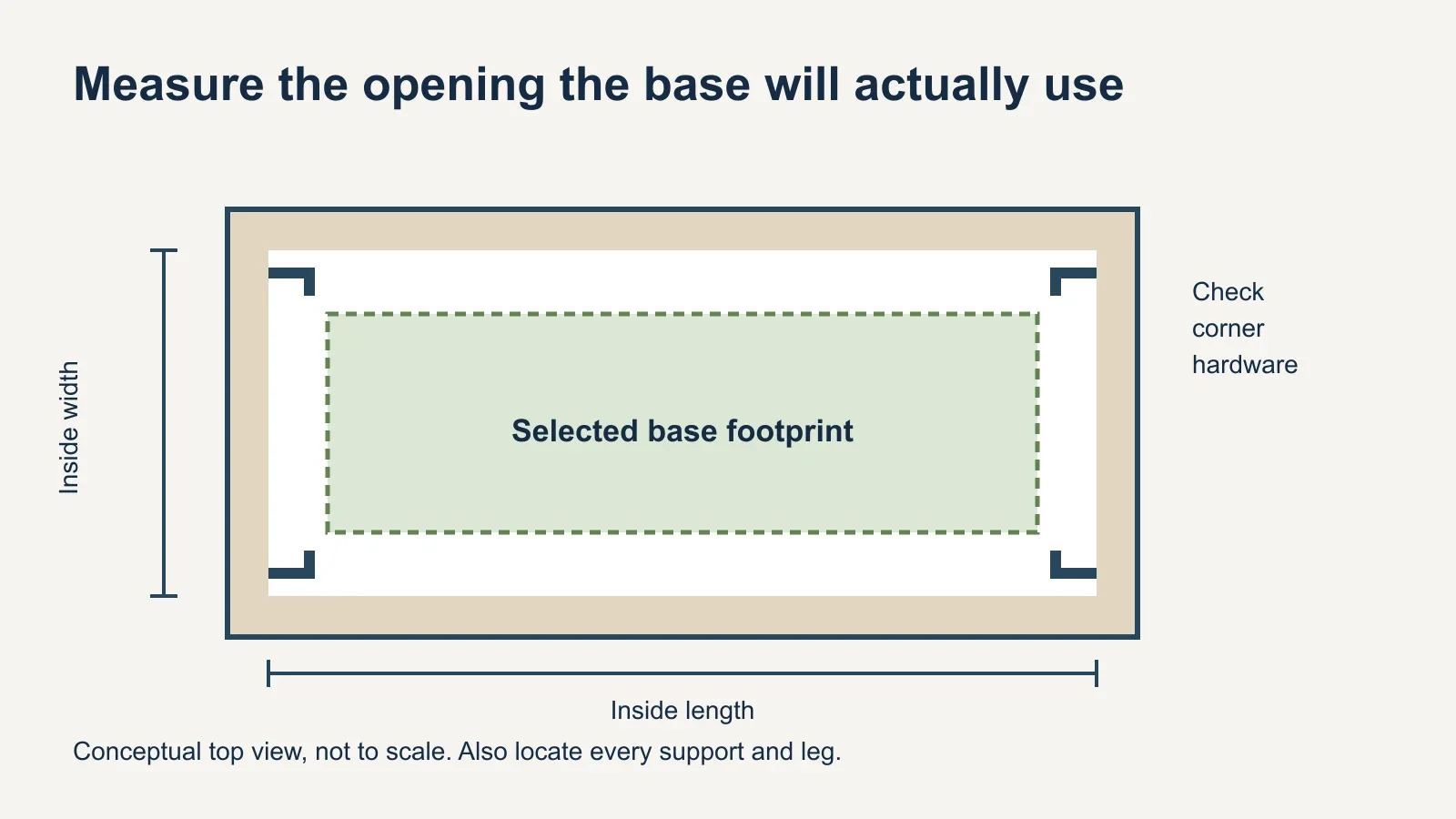
For an original screening example, suppose a frame is confirmed to have a clear 61-by-81-inch opening and the chosen base measures 59½ by 79½ inches. That leaves 1½ inches total in each direction, or ¾ inch at each edge if centered. The arithmetic does not establish adequate operating clearance: mounting hardware, mattress overhang, and the manufacturer’s instructions can change the decision.
Decide which structure will carry the load
There are two common arrangements to ask about. In one, the adjustable base stands on its own approved legs inside a decorative furniture surround. In the other, a base approved for that installation rests on an existing platform. These are different load paths. The furniture might mainly frame the bed in the first arrangement and carry the base, mattress, and occupants in the second.
If your frame has removable slats, confirm what can actually be removed without compromising the frame. A center beam or cross rail can serve a structural purpose beyond holding the mattress. Do not cut rails, omit required braces, or remove a central support just because the base would otherwise collide with it. Ask the furniture manufacturer whether the intended configuration is allowed.
For a platform setup, the phrase zero clearance describes a feature of a particular base; it does not certify the strength of your furniture. Helix’s current support page describes using its zero-clearance Adjustable Base on a compatible frame or platform without the included legs. That statement should not be transferred to an older model or another brand. Obtain the approved support arrangement for the exact base you intend to buy.
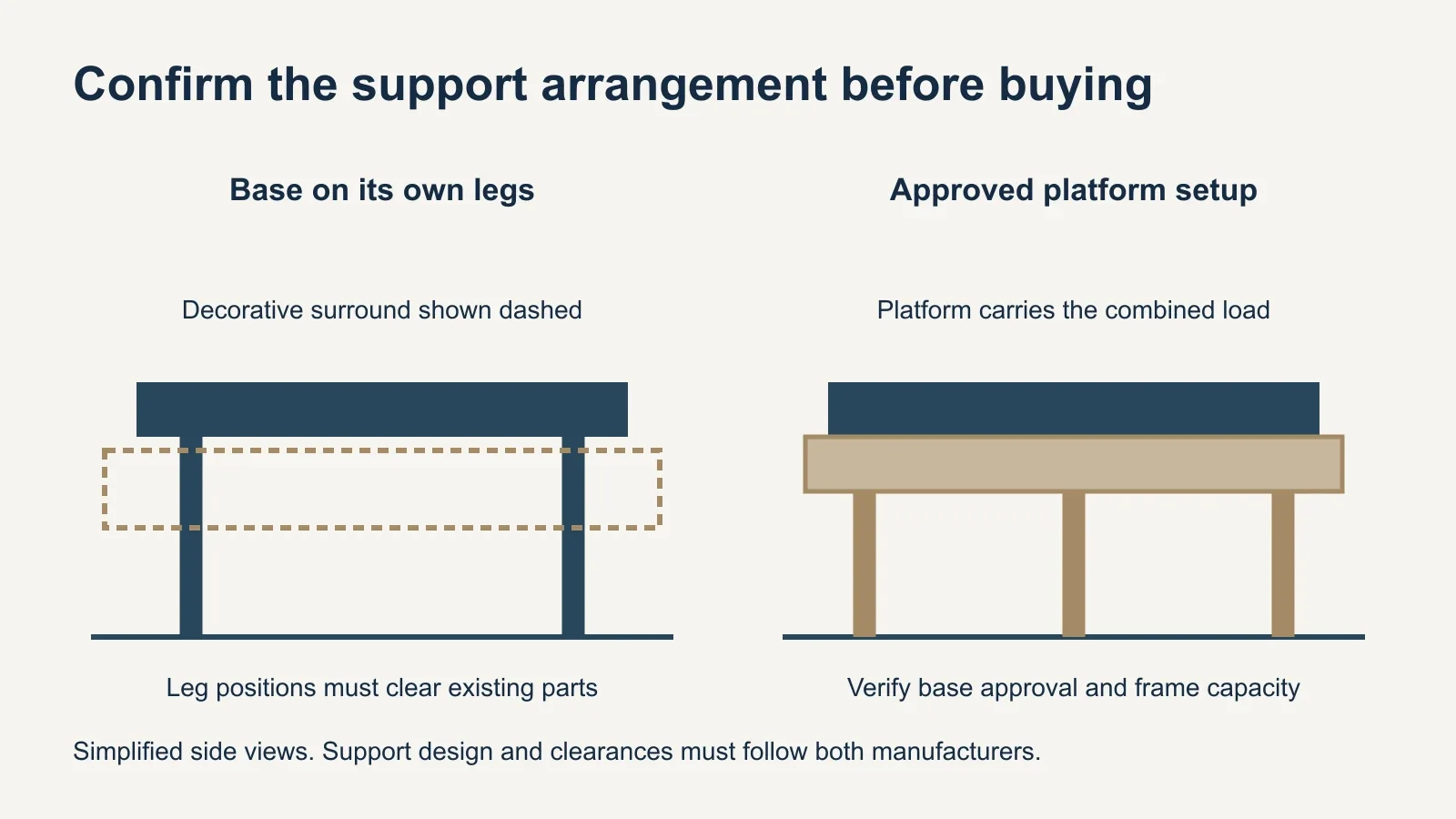
Ask how the weight ratings are defined. The base rating and the furniture rating may count different items. For a platform installation, the furniture must accommodate the applicable combined load, including the adjustable base itself. A mattress-only support rating is not enough information. Keep the manufacturer’s answer with the model number and proposed configuration.
Check the frame, base, and mattress as one system
| Part of the system | Details to collect | What must be confirmed |
|---|---|---|
| Existing frame | Model; smallest inside width/length; rail and bracket positions | Base fits without altering required structure |
| Support arrangement | Slats, platform, cross rails, center beam and legs | Approved leg or platform setup; adequate load support |
| Adjustable base | Exact model/year/size; footprint and leg locations | Fits the available support and clears fixed parts |
| Finished height | Floor-to-deck height plus mattress thickness | Comfortable entry/exit; rails and nearby furniture clear |
| Moving assembly | Head/foot travel; retainer bar; cables and accessories | No contact or pinching through permitted motion |
| Mattress | Exact model, size, thickness and adjustable-base approval | Designed to flex on the selected base and configuration |
| Split configuration | Base pieces, mattress pieces, sync or independent operation | Sizes and operating arrangement match as specified |
The mattress needs its own compatibility check even if it fits the frame. Helix advises owners of other brands to confirm suitability with their mattress manufacturer because not every mattress is designed to bend. A rigid or unsuitable mattress can resist the base’s motion. “Foam” or “hybrid” is a material category, not a substitute for approval of a particular mattress model.
Tempur-Pedic states that its mattresses are compatible with its power bases. That is a statement about its own product system. For an older mattress, a third-party base, or an unusual split design, give the seller the exact model information and ask for confirmation. Avoid forcing a mattress to conform or adding an unapproved board between it and the moving deck.
A King base can arrive in sections without being an independently adjustable Split King sleeping arrangement. Ask how the pieces join or synchronize and whether the mattress is one piece, two pieces, or a specialized split design. Do not infer operating behavior from the number of shipping boxes. The mattress and controls must match the intended arrangement.
Calculate height and check the full range of movement
For a base on legs, use the manufacturer’s floor-to-top-of-deck height at your selected leg setting, then add mattress thickness. Do not add leg height a second time if it is already included in that deck measurement. For a platform installation, account for the existing platform height plus the base’s approved installed height and the mattress.
An illustrative 10-inch floor-to-deck height with a 12-inch mattress gives a nominal 22-inch top surface when flat. That example is arithmetic, not a recommended bed height. Consider how the person using the bed will get in and out, how much mattress sits above the side rails, and whether a nearby nightstand remains convenient.
Ask for the motion-clearance requirements at the head, foot, and sides. A mattress can move relative to the decorative frame, and accessories may project beyond the flat deck. Check the retainer bar against a footboard and the raised head section against the headboard or wall. A marketing term about staying near the wall does not replace the model’s installation drawing.
Plan power and cable routing before the base is in place. Keep cords away from moving joints and locations where furniture can pinch them, following the manual. Storage boxes, pets, and children must stay clear of the moving mechanism. Arrange the eventual operational check according to the manufacturer’s instructions, with the area clear; do not reach underneath a moving bed to investigate contact.
Send the seller a complete compatibility question
A useful question includes the frame model, base model and generation, mattress model, interior measurements, photographs, and the intended support setup. Ask the seller to address the actual combination rather than whether its product “works with most beds.” Keep written confirmation and the applicable manuals so everyone preparing the installation is working from the same information.
- What is the exact assembled footprint, including any projecting hardware?
- Where do the base legs land, and which leg heights are approved?
- Can this model rest on my existing platform, and what support and load capacity does it require?
- Which frame components must remain, and is removal of the slats permitted by the frame manufacturer?
- What clearance is required through the full range of head and foot motion?
- Is this exact mattress approved, including any split or synchronized configuration?
- Are headboard brackets, retainers, and other necessary parts included?
- What delivery, assembly, and access requirements apply to this order?
Headboard attachment is a separate detail from fitting inside a complete bed frame. Helix, for example, identifies headboard brackets as an optional accessory rather than an included part of its Adjustable Base. If your existing headboard remains attached to its own side rails, describe that arrangement; do not order or improvise brackets without checking what the base and furniture require.
Prepare for an installation that can be checked
Confirm delivery access for the base and leave space for unpacking and handling it according to the instructions. Save the old frame’s hardware if approved disassembly is needed, and keep its instructions available. Our assembly-space guide helps you plan the work area separately from the finished bed footprint.
After assembly, the installer should verify the approved support arrangement, clearances, and operation before the bed is used. If there is contact, strain, an unexpected movement, or a trapped cable, stop using the mechanism and have the cause assessed. Adding improvised spacers or operating through a collision does not establish compatibility.
For help with the furniture portion, share the complete frame–base–mattress details when requesting bed assembly. Confirm the scope for the powered base separately. The goal is to keep the furniture you like only when the whole arrangement can be assembled and operated as its manufacturers intend.