How Much Does It Cost to Hide TV Wires? In-Wall vs Raceway Options
Surface cable covers and in-wall routing have different costs and requirements. Compare the full scope, including power, materials, access and wall finishing.
Table of contents
Start by identifying what the quoted price buysSurface raceways keep the cable route accessibleIn-wall signal routing and power are separate decisionsWall conditions determine how much access work is neededCompare the complete project totalsChoose the least invasive method that meets your goal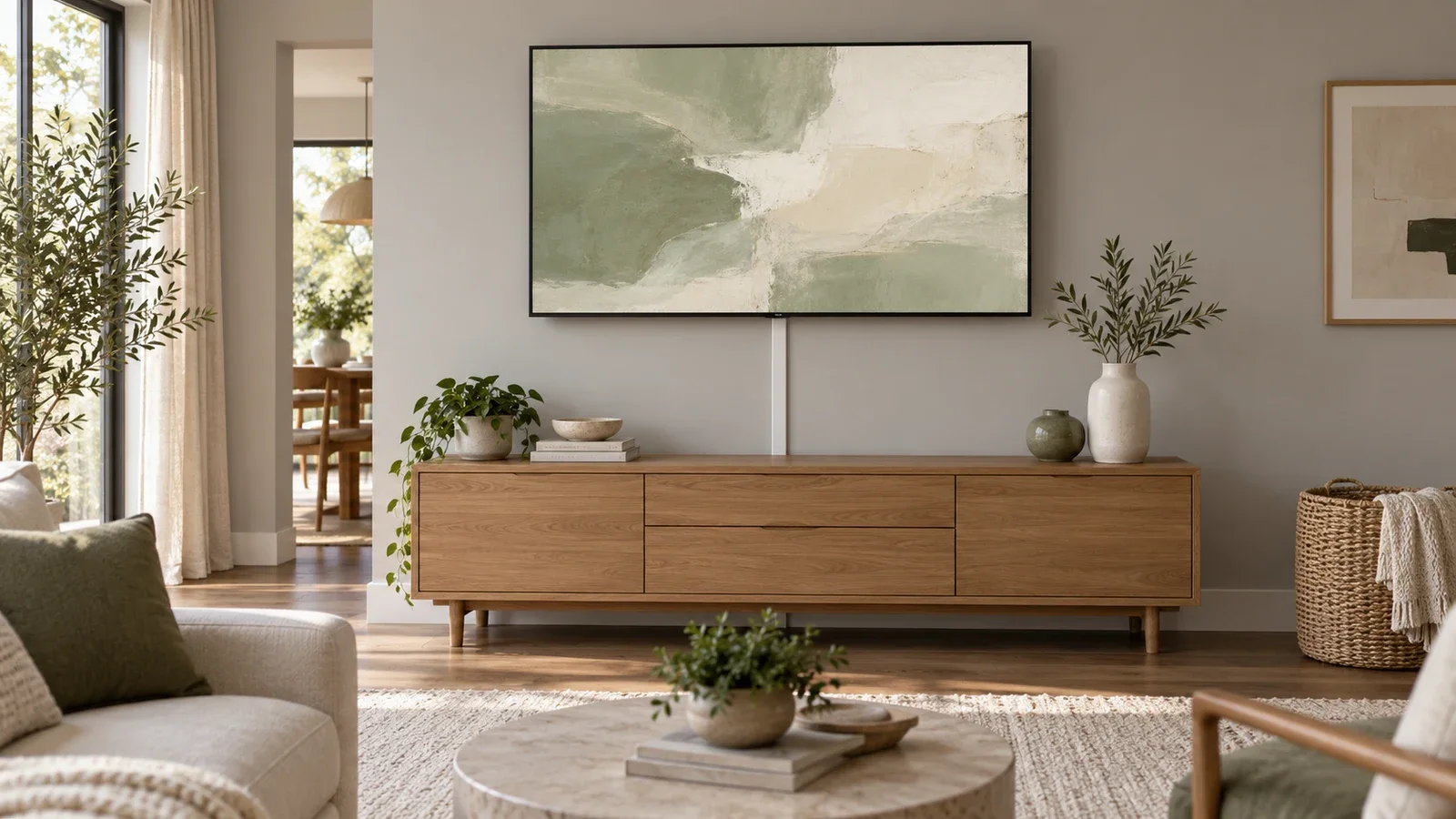
UPTask lists surface plastic cable covers from $39 as a TV-mounting add-on. Concealing wires inside the wall is a different scope: it can require suitable signal cables, a power solution, wall access and repairs. A retail in-wall kit price covers materials, while an installation package may also include mounting the TV. Compare itemized scopes before treating two advertised prices as equivalent; there is no single verified UPTask in-wall price to quote here.
Start by identifying what the quoted price buys
“Hide the wires” can mean placing a removable cover over cords on the wall, passing signal cables through a suitable wall cavity, or providing both concealed signal routing and power behind the television. These outcomes look similar from the sofa but involve different equipment and work. Ask the provider to name the intended method.
The examples below were checked October 12, 2026. They deliberately identify different price types rather than combining them into a national average. UPTask’s price is a Bay Area service add-on; the other examples are a retailer’s installation package and a manufacturer’s hardware price. Availability, selected options and applicable checkout charges still need confirmation.
| Example | Displayed price | What the price represents |
|---|---|---|
| UPTask plastic cable covers | From $39 | Add-on to TV mounting; surface concealment |
| Best Buy basic mounting + wire concealment, up to 90 in | $269.99 | Stand-alone service package; accessories extra |
| PowerBridge TWOSB-CK | $109.95 | TV-and-soundbar power/cable kit; hardware only |
Best Buy’s comparable basic mounting package without wire concealment is $179.99 for TVs up to 90 inches. The $90 difference is a comparison between those two listed packages, not a promise of a $90 stand-alone visit. Its standard concealment scope uses a single stud bay or a customer-provided kit, and mounting brackets and in-wall power kits are separate purchases.
For an UPTask estimate, start with the selected TV-mounting price and add the applicable surface-cover option and other chosen work. Do not treat the $39 starting add-on as a complete mounting appointment or a price for new electrical wiring. The TV mounting cost guide explains the broader service-price components.
Surface raceways keep the cable route accessible
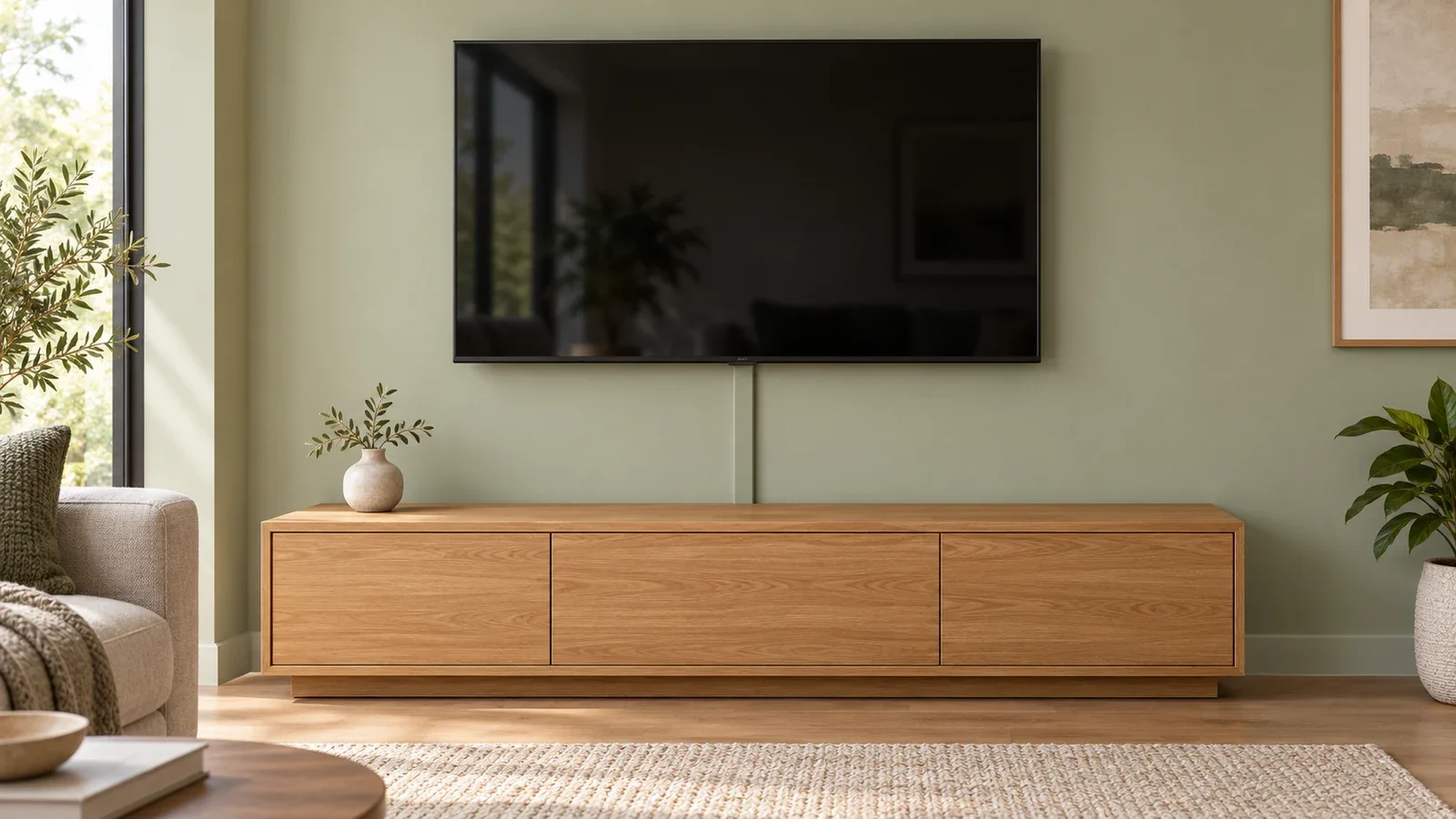
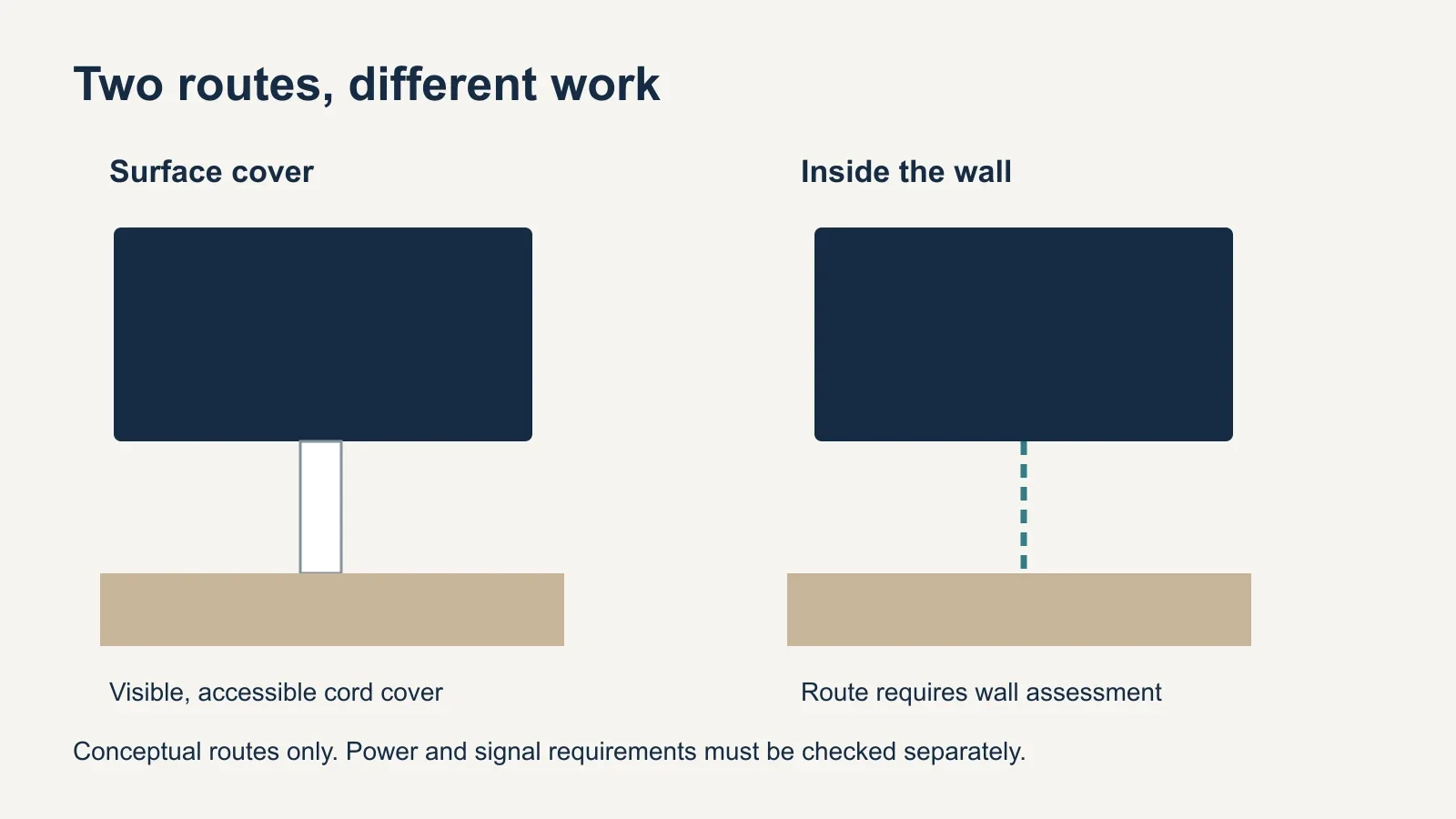
A surface raceway, often called a cord cover, encloses compatible cords along the finished wall. It can be useful when you want a tidy route without opening a wall cavity, or when a solid wall makes a concealed route more involved. You will still see the outline of the cover, even when it matches the wall color.
Legrand’s Wiremold CMK30, for example, has a paintable cover that snaps off for cable access. That illustrates the practical difference from a concealed cavity route: changing a connected device can be easier when the cable path remains accessible. Follow the specific cover’s installation and cable-use instructions rather than assuming every decorative channel accepts the same wiring.
The route length, number of bends, connector size and number of cords affect the materials and layout. A vertical run directly to a console is different from a path around a doorway or across a room. Check the chosen cover’s capacity and corners with the actual cable bundle; squeezing cords into an undersized channel is not a satisfactory finish.
Ask whether cutting, fastening and painting the cover are included. Also discuss the finished wall: adhesive or screw attachment can leave marks that need repair later. For a rental, obtain the property owner’s agreement to the proposed attachment and finish before treating a surface route as automatically damage-free.
In-wall signal routing and power are separate decisions
An HDMI, Ethernet or other signal connection does not resolve how the TV receives electricity. If a suitable receptacle already exists behind the planned TV position, the remaining job may be limited to signal routing. If the outlet is down near the floor, the estimate needs a separate explanation of how power reaches the screen.
Do not pass an ordinary TV power cord or an extension cord through a wall as a substitute for a suitable power installation. ESFI advises against running extension cords through walls, ceilings or floors. Use a properly specified solution and have any changes to the home’s fixed electrical wiring assessed and performed by a qualified electrician as required locally.
A purpose-built in-wall power-extension kit is a different product from a loose extension cord. For example, the PowerBridge TWOSB-CK combines a specified in-wall power assembly with cable passages for a TV and soundbar. Its $109.95 listed hardware price does not include hiring an installer, purchasing every signal cable or restoring a wall.
Check the exact kit’s wall-depth, cable-length, connector and placement requirements before purchasing it. A kit can be suitable for one framed wall and unsuitable for another route. A nearby grounded outlet, clear space behind the TV and access to the lower connection must all be considered according to the product instructions.
Wall conditions determine how much access work is needed
A short vertical path inside one unobstructed framing cavity is easier to define than a route crossing several studs. Existing pipes, wiring, blocking, insulation or a fireplace enclosure may change the plan. The installer should assess the proposed path before promising that two small openings will be enough.
Brick, concrete and thin wall finishes over masonry require a different conversation from an ordinary hollow framed wall. There may be no usable cavity where you expect one. A surface cover, a purpose-designed chase or other separately assessed work may be more practical. A wall that supports a bracket is not automatically suitable for concealed cables.
Finish quality also changes the scope. An access opening hidden behind furniture is not the same result as a repaired, textured and painted wall. Ask whether repairs cover only the openings or also texture matching and repainting a larger area. Confirm who does that work and whether another visit is needed.
If the TV is already installed, removal and reinstallation may add labor, particularly for a large or unusually positioned screen. A full-motion mount also needs cable slack through its intended travel. Review the differences between fixed, tilt and full-motion mounts when planning access and movement.
Compare the complete project totals
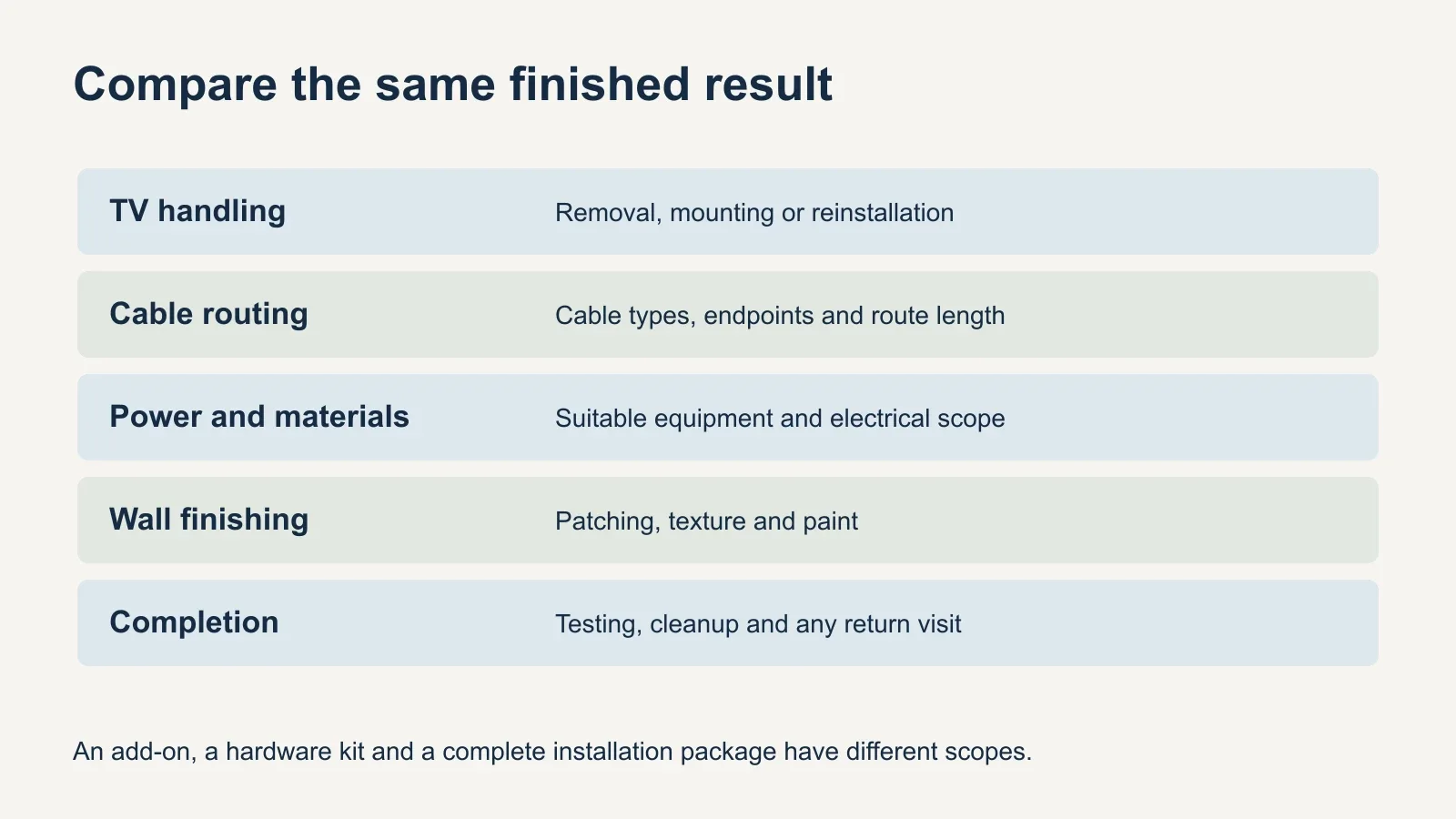
Use the same desired outcome for every estimate. If one provider supplies a kit and another expects you to buy it, add the appropriate materials before comparing totals. If one includes wall finishing and another leaves that to you, record the difference rather than assuming the cheaper number delivers the same result.
- TV handling: removal, mounting or reinstallation, if needed.
- Signal route: which cables, how far they run and which endpoints are connected.
- Power: existing receptacle, compatible listed kit or separately quoted electrical work.
- Materials: covers, fittings, wall plates, signal cables and power equipment.
- Wall work: access openings, patching, texture and painting.
- Completion: connection testing, cleanup, applicable fees and any return visit.
A useful estimate separates the base scope from work that depends on opening the wall. Ask how an unexpected obstruction will be handled and priced before work expands. A clear decision point prevents a small concealment job from turning into an unplanned wall-repair project.
Choose the least invasive method that meets your goal
Choose a surface cover when its visible profile is acceptable and accessible routing is useful. Consider in-wall concealment when an uninterrupted wall appearance matters enough to justify the verified route, suitable power arrangement and any finishing work. Neither method should be chosen solely because the TV looks cable-free in a photo.
Before booking, send photos of the full wall, the outlet, the equipment below the screen and the TV’s current position. Include model numbers, the cables you want connected and whether you expect the wall to be painted afterward. Mention a fireplace, masonry or an already-mounted large TV at the start.
For UPTask TV mounting, surface plastic cable covers are a listed selection. Ask for separate assessment of new electrical work or another cable-routing method. Confirm the chosen finish and complete price so that “hidden wires” means the same result to you and the installer.