How High Should a TV Be Mounted Above a Fireplace?
Choose an above-fireplace TV position by reconciling equipment clearances with the actual screen dimensions and viewing position. A fixed gap above the mantel is not enough.
Table of contents
Separate the three measurements people call “TV height”Find the permitted location before choosing a decorative gapCalculate the screen position from the actual cabinetTest the permitted outline from the seats you usePlan both positions if you want a pull-down mountGive the installer dimensions with clear endpoints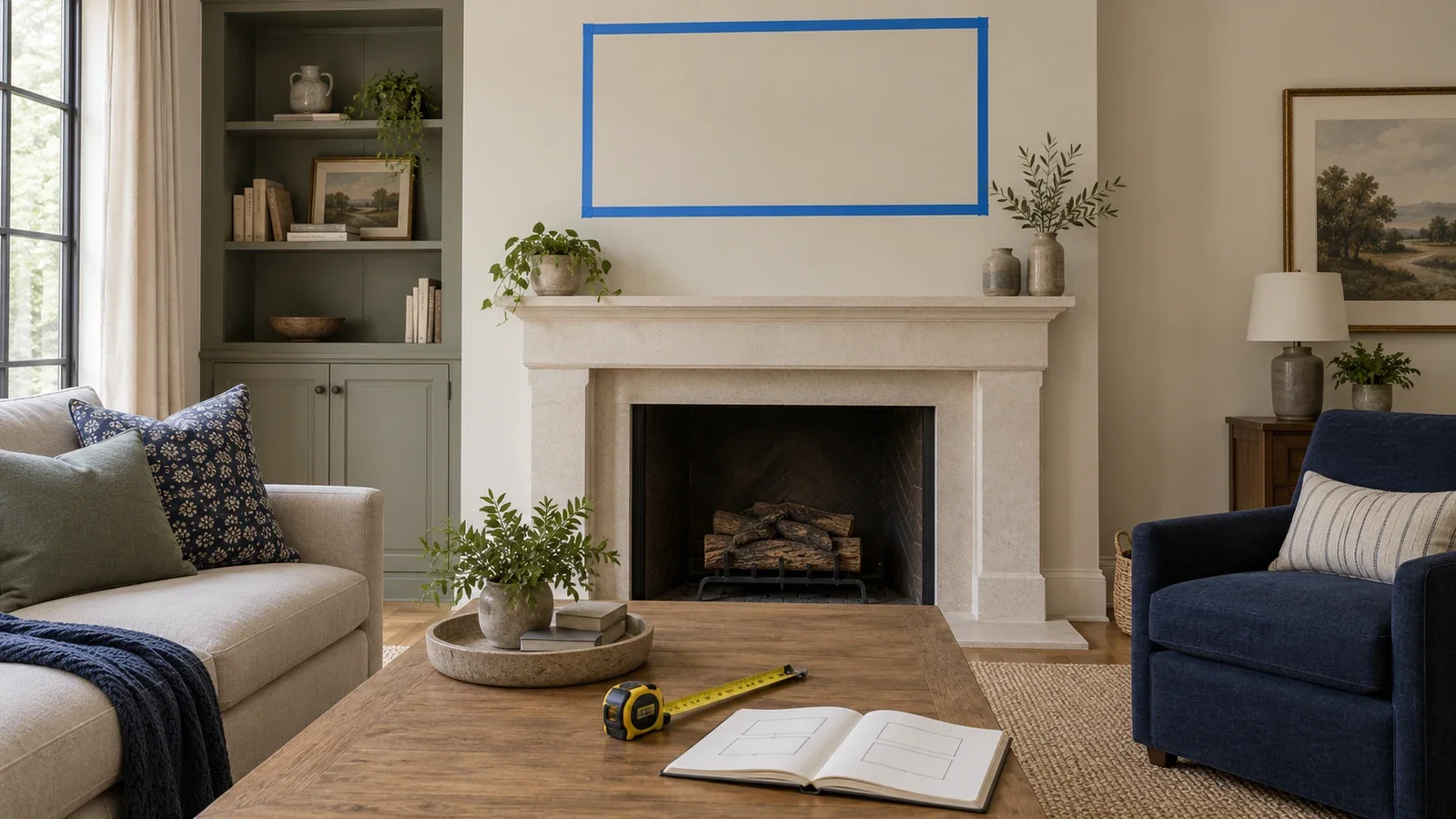
There is no universal mounting height or mantel-to-TV gap that works above every fireplace. First establish where the exact fireplace and TV permit the screen to sit. Then calculate its bottom, center and top heights from the actual cabinet dimensions, and test that outline from your usual seat. If the permitted location is uncomfortable or does not fit, change the arrangement instead of reducing a required clearance.
Separate the three measurements people call “TV height”
A request to place a TV “six inches above the fireplace” leaves crucial details unanswered. Does the measurement start at the firebox opening, the appliance trim or the top of a mantel? Does it end at the TV cabinet, its picture area or a bracket? Write down both endpoints whenever discussing a clearance.
For room planning, record floor-to-bottom, floor-to-screen-center and floor-to-top dimensions. For equipment requirements, preserve the manufacturer’s own reference points. A requirement measured from the fireplace opening cannot be replaced with the same number measured from the mantel, even if the second gap looks generous.
| Measurement | What it helps establish | What it does not establish |
|---|---|---|
| Floor to screen center | Viewing position from the seat | Fireplace clearance |
| Mantel top to TV bottom | Visible gap and physical fit | Permission to expose the TV to heat |
| Manual-defined appliance clearance | Required equipment relationship | Comfort from your sofa |
| Floor to mount fasteners | Bracket attachment layout | The final screen center by itself |
Find the permitted location before choosing a decorative gap
Collect the fireplace model, television model and mount instructions. Identify the fireplace’s requirements for the wall finish, mantel and any television arrangement, plus the TV’s operating and ventilation limits. Heatilator’s guidance specifically calls for checking both the fireplace and TV specifications. A mantel’s permitted location does not automatically establish the television’s permitted location.
Mantel projection and the installed heat-management configuration can affect the layout. Heat & Glo describes purpose-designed heat-management systems associated with particular fireplaces. A photograph of one of those installations does not establish the same clearance for a conventional fireplace, or for an appliance without those components.
If the documentation is unclear, have the fireplace manufacturer or a qualified hearth professional resolve the proposed arrangement before drilling. Samsung’s general mounting advice does not recommend above-fireplace placement. The separate guide to deciding whether a TV belongs above a fireplace covers the broader heat, wall-support and viewing checks.
Calculate the screen position from the actual cabinet
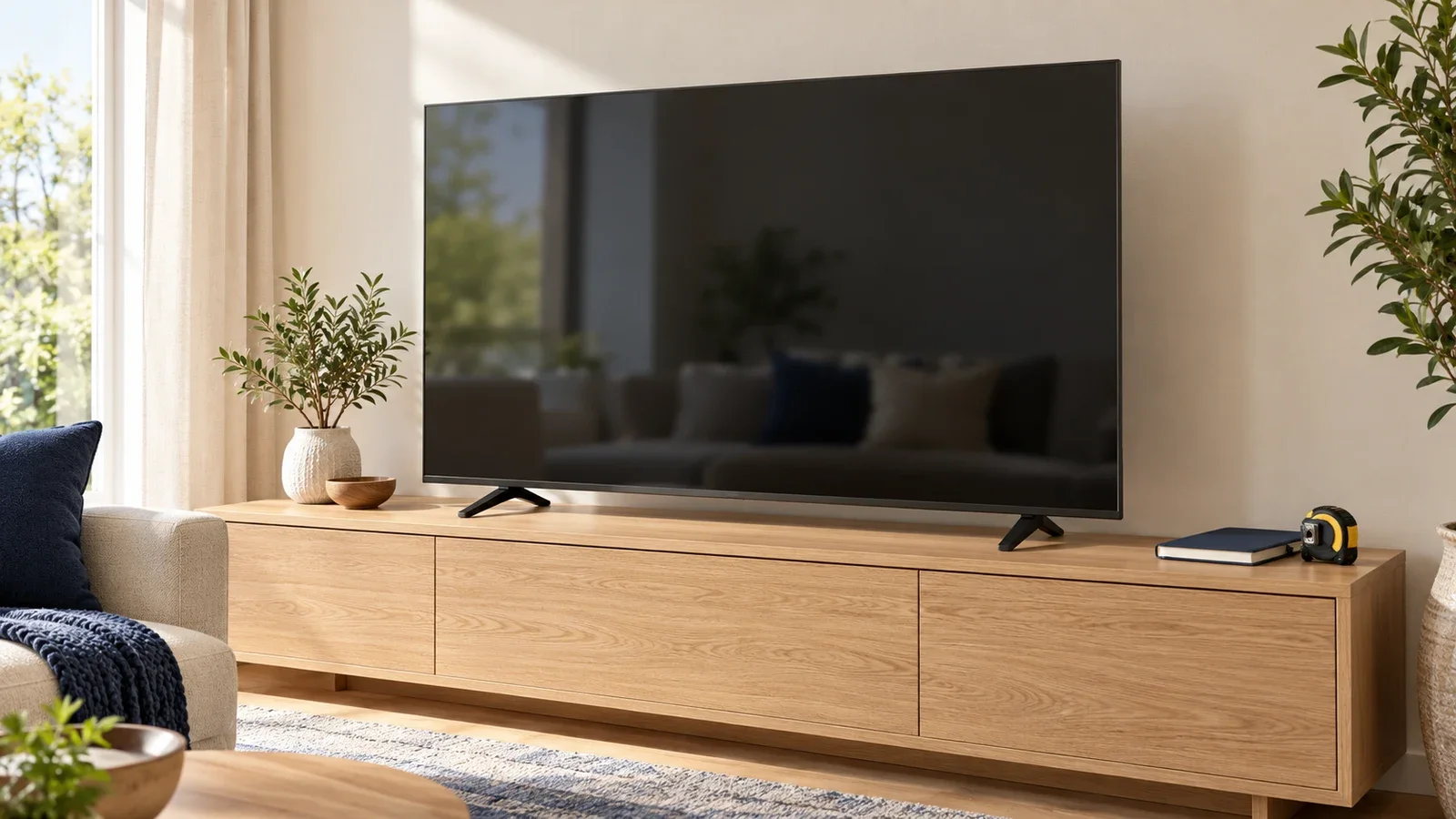
Once an acceptable candidate bottom height has been established, use the TV’s outside height without the tabletop stand. For a rectangular cabinet with a centered picture, center height equals bottom height plus half the cabinet height. Top height equals bottom height plus the full cabinet height. If the picture is offset within the casing, measure its actual center separately.
Here is a hypothetical arithmetic example, not an approved fireplace layout. Suppose the mantel top is 48 inches above the floor, a proposed TV bottom is at 58 inches, and the cabinet is 34 inches tall with a centered picture. The visible gap is 10 inches, the screen center is 75 inches, and the cabinet top is 92 inches.
That example shows why a seemingly small gap can still produce a high screen. A 96-inch ceiling would leave only 4 inches above the cabinet, before checking the TV’s required ventilation, crown molding or installation access. None of those example dimensions establishes fire clearance or a recommended viewing height.
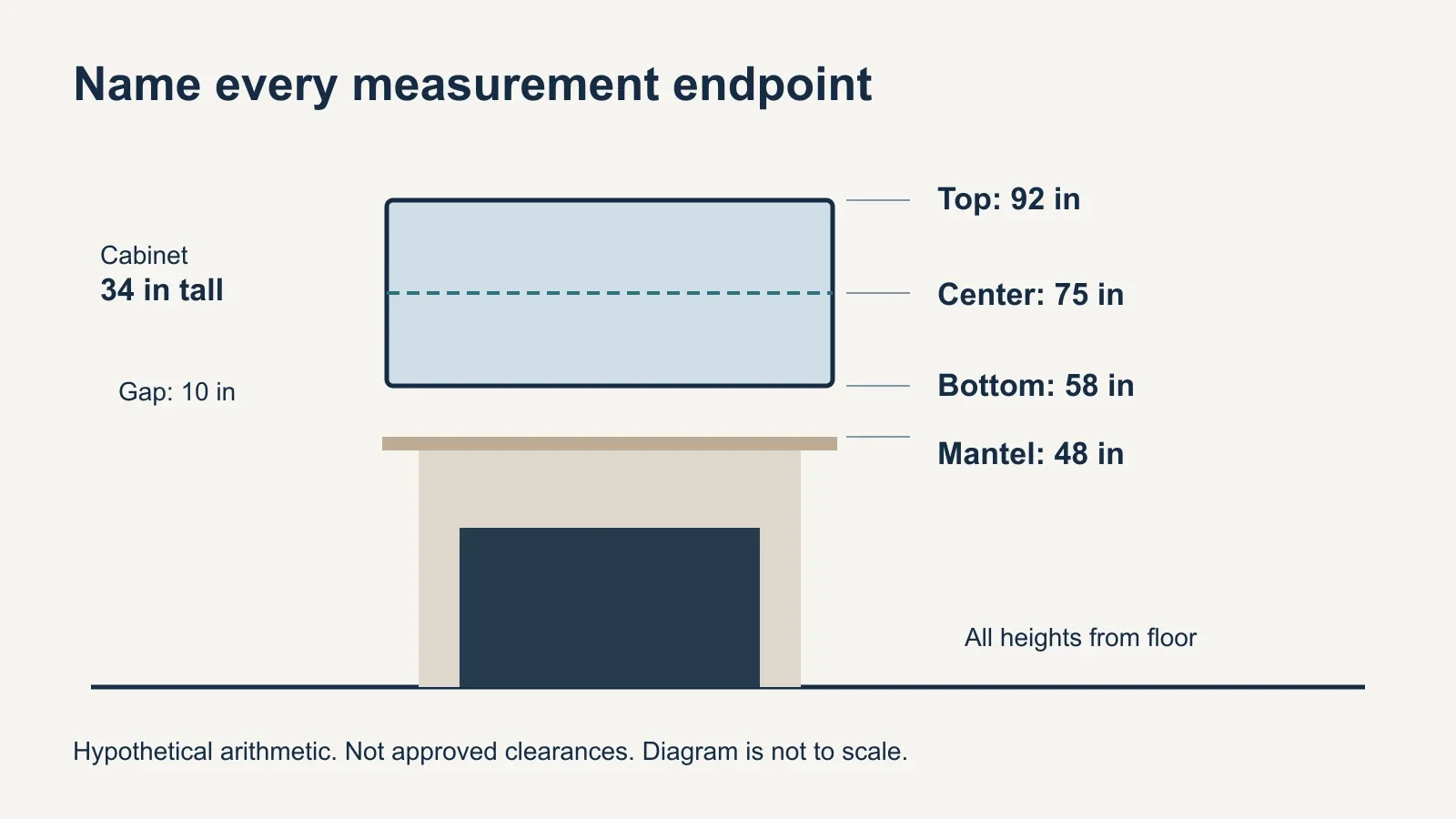
Do the calculation with the full outer dimensions of your chosen model. A screen-diagonal label does not include all the information needed to fit between a mantel and ceiling. The TV mounting height chart explains how screen size changes the edges around a chosen center and why cabinet measurements matter.
Test the permitted outline from the seats you use
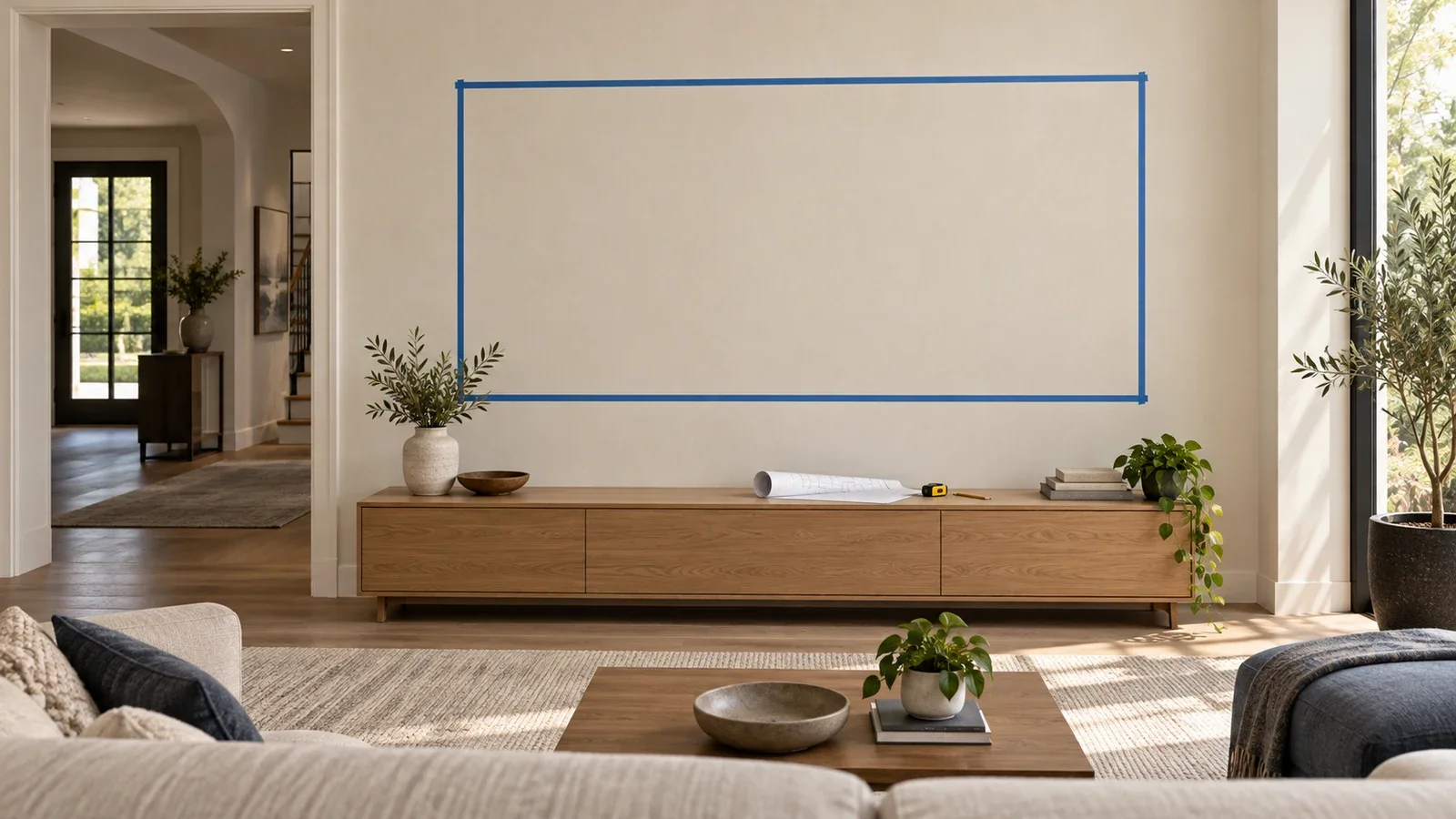
Mark the candidate TV outline with a removable method suited to the wall finish. Sit in your normal position and check the screen center, lower edge and overall view. Repeat from the other regularly used seats. An outline is more informative than looking at a small center mark from a standing position.
If you keep changing posture to see the outline comfortably, revisit the room plan. A side wall, different furniture arrangement or separate media console may provide a more useful everyday viewing position. A smaller television can solve a top-edge fit problem, but it does not automatically fix a bottom edge forced too high by the fireplace.
Tilting the panel changes its angle toward the viewer; it does not lower the screen center. Avoid choosing the final height on the assumption that additional tilt will solve every viewing issue. Consider how much viewing happens from the sofa compared with how the wall looks when nobody is watching.
Plan both positions if you want a pull-down mount
A pull-down mount introduces a stored position, a lowered position and the path between them. Its instructions may require measurements of mantel depth, available wall height, TV height and attached accessories. MantelMount’s fit guidance uses these dimensions and distinguishes standard surface mounting from recessed configurations.
Check the complete moving assembly, including a soundbar if attached. The TV must clear the mantel and nearby objects throughout travel, while cables retain the slack required by the mount. Advertised vertical travel alone does not prove that a particular TV can reach the preferred height in your room.
Follow the manufacturer’s restrictions on fireplace operation. MantelMount advises against keeping the TV lowered while the fireplace is on. Do not treat a heat-sensing handle or an adjustable stop as permission to disregard the appliance and television requirements.
Give the installer dimensions with clear endpoints
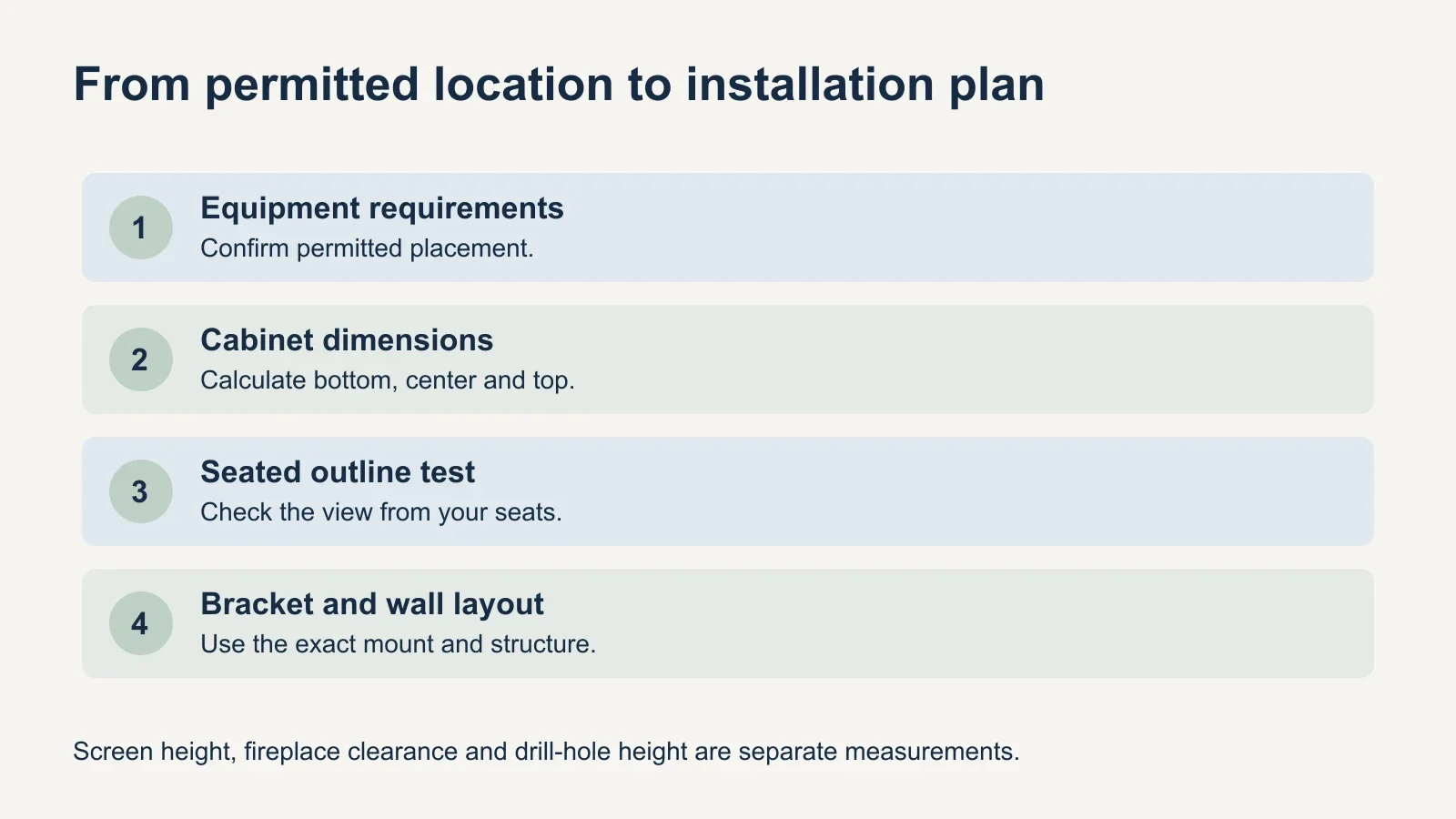
- Share the exact fireplace, TV and mount model numbers and the applicable instructions.
- Record mantel-top height, mantel projection and available height to ceiling or trim.
- Label the proposed cabinet bottom, screen center and cabinet top above the floor.
- Identify the normal viewing seats, any soundbar and the intended mount movement.
- Confirm the cable route and suitable supporting structure at the required attachment locations.
- Review the final outline before the bracket layout is transferred to the wall.
The mount’s attachment locations must be derived from the actual hardware. Rear TV holes and mounting rails can sit above or below the screen center; SANUS HeightFinder accounts for this distinction. A room-elevation measurement should therefore never be used directly as a drill-hole measurement.
When arranging UPTask TV mounting, provide the measurements and equipment details with the fireplace-wall photos. Agree on a location that fits the documented equipment requirements and your viewing position before the installation starts.